2026 How to Choose the Right Submerged Arc Welding Wire for Your Project?
Choosing the right Submerged Arc Welding Wire is crucial for achieving high-quality welds. The choice can significantly impact productivity and efficiency in welding projects. According to the American Welding Society, proper selection of welding wire can lead to a 20% increase in productivity.
Factors to consider include material compatibility, wire diameter, and specific application requirements. Different projects may demand different characteristics in welding wire, such as tensile strength and chemical composition. An unsuitable wire can result in underwhelming weld quality. Reports indicate that up to 30% of welding defects arise from incorrect wire selection.
Welding professionals must weigh these considerations carefully. While resources exist to guide this decision, gaps in knowledge can lead to costly mistakes. Sometimes, trial and error is necessary to find the ideal match. Ultimately, the right Submerged Arc Welding Wire can elevate project success and enhance overall operational efficiency.
Understanding Submerged Arc Welding and Its Applications
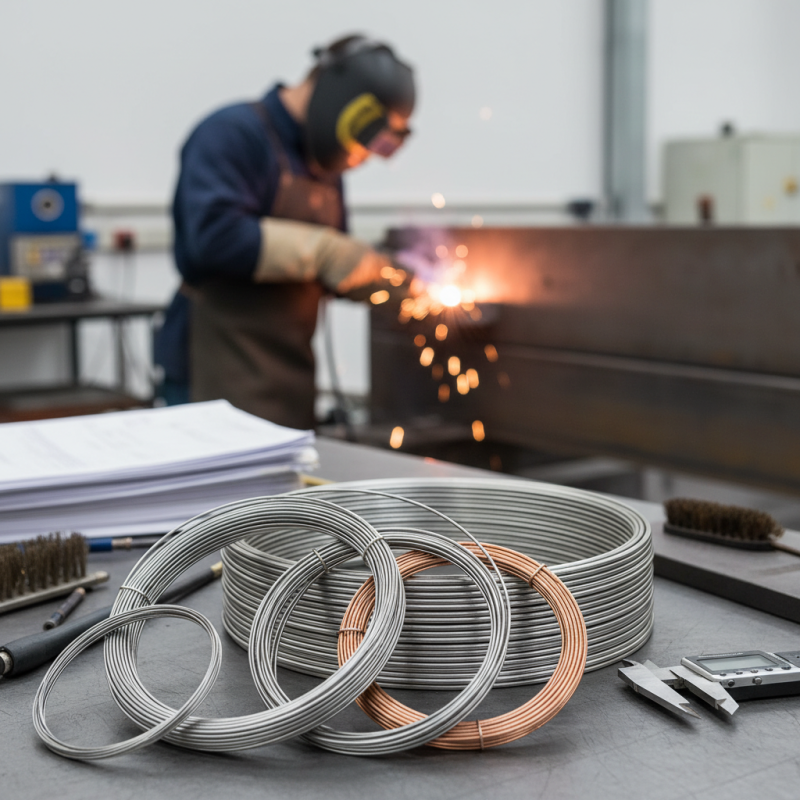
Submerged Arc Welding (SAW) is a widely used welding process, known for its efficiency and ability to join thick materials. It involves the formation of an arc beneath a layer of granular flux, which protects the weld from contamination. This process is often applied in industries such as shipbuilding, construction, and manufacturing, where strong and reliable joints are crucial. The versatility of SAW makes it ideal for various applications, allowing for thick plate welding and providing high-quality welds in less time.
When selecting submerged arc welding wire, consider the specific requirements of your project. Different wires have varying compositions, which can affect weld quality and suitability. Look for wires designed for specific materials you will be working with. For instance, low-alloy steel wires are often favored for structural applications. Pay attention to the chemical composition to enhance corrosion resistance and mechanical properties.
Tips: Always test your wire on scrap material before full-scale application. This ensures you achieve the desired results and helps reduce wasted resources. Additionally, consult welding experts and industry guidelines to stay informed about advancements in welding technology. Engaging with the community can provide insights that are beneficial for improved results in your projects.
Key Factors to Consider When Selecting Welding Wire
When selecting the right submerged arc welding (SAW) wire, several key factors play a vital role. The chemical composition is crucial. It should match the base metal and desired weld properties. The American Welding Society (AWS) classification system can help in this regard, providing guidelines for matching materials effectively. Surveys indicate that 30% of weld failures can be traced back to improper wire selection, emphasizing its importance.
The diameter of the welding wire impacts the heat input and weld penetration. Larger diameters allow for higher deposition rates but may lead to increased heat input. Conversely, smaller diameters are suitable for thinner materials. Industry studies have shown a direct correlation between wire size and the quality of welds.
Tips: Analyze the material thickness before making your selection. Consider the joint design and whether the wire will be used for multi-pass welds. Evaluate your project requirements carefully, as using the wrong wire can lead to significant rework. Consult with experienced welders or industry professionals to gain insights into specific applications and wire performance. This practical knowledge is invaluable in making well-informed decisions. Ensure your choice supports both quality and efficiency in your welding projects.
Types of Submerged Arc Welding Wires Available in the Market
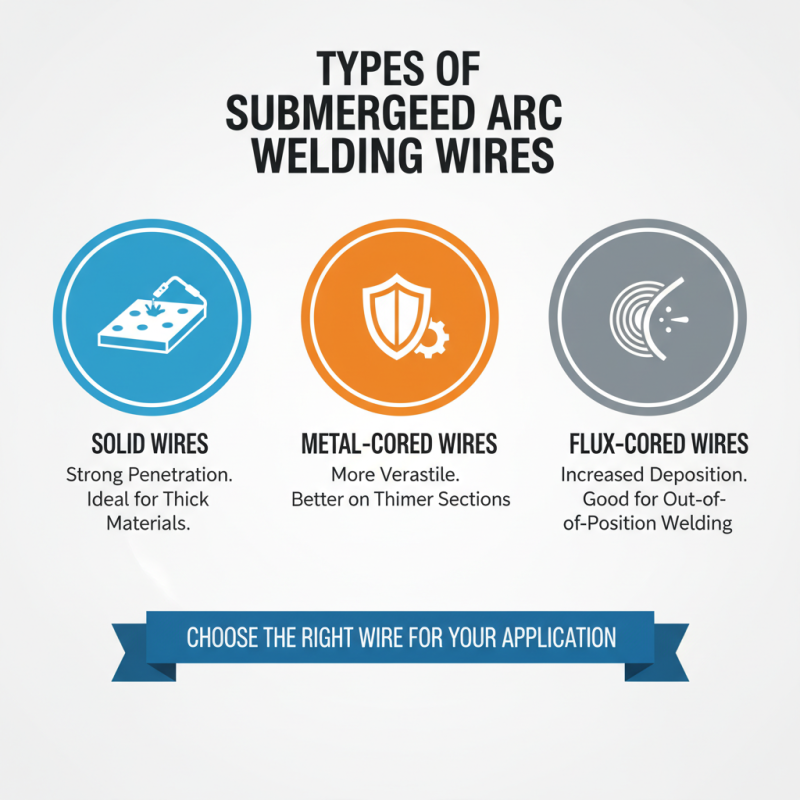
When it comes to submerged arc welding, choosing the right wire is crucial. Various types of submerged arc welding wires are available, each designed for specific applications. The most common wires include solid wires, metal-cored wires, and flux-cored wires. Solid wires typically offer strong penetration and are ideal for thick materials. Metal-cored wires are more versatile and provide better performance on thinner sections.
In addition to these, you’ll find wires tailored for specific metals like stainless steel or high-strength alloys. Each type has unique properties that influence bead shape, penetration, and travel speed. Consider the shielding flux as well, which can significantly affect overall performance.
While there are numerous options, choosing the right wire can be overwhelming. It’s essential to assess your project’s requirements carefully. Reflect on the environmental conditions too; some wires perform better in specific settings. Testing different wires on scrap metal can provide essential insights. Remember, it may take several trials to find the perfect fit for your needs.
How Wire Diameter Influences Welding Performance and Quality
When selecting submerged arc welding (SAW) wire, diameter significantly affects performance. For instance, the American Welding Society indicates that a larger diameter can enhance deposition rates but may lead to poor penetration. Reports suggest that 1.6 mm wire provides optimum performance for thicker materials. Conversely, using a smaller diameter often yields better control in delicate applications.
Welding wire diameter also impacts bead appearance and mechanical properties. A 1.2 mm wire produces a finer bead, contributing to aesthetics and structural integrity. However, practitioners often encounter inconsistencies. A study by the Welding Research Council highlights that varying wire diameter can produce inconsistent arc stability. This inconsistency might prompt welders to reflect on their choices to ensure they align with project requirements.
It's crucial to consider the heat input associated with wire diameter. Thicker wires often increase thermal input, which could lead to distortions in the base material. According to a recent technical report, managing the thermal cycle in welding operations allows for improved results. Overheating risks can deter weld quality, making this an essential factor for welders to examine carefully.
Submerged Arc Welding Wire Diameter and Its Influence on Welding Performance
This chart illustrates the relationship between the diameter of submerged arc welding wire and two key performance metrics: welding speed and deposition rate. As the diameter increases, both performance metrics generally improve, highlighting the importance of choosing the right wire diameter for optimal welding quality and efficiency.
Evaluating Manufacturer Specifications and Certifications for Quality
When selecting submerged arc welding wire, understanding manufacturer specifications and certifications is crucial. Quality standards, like AWS A5.17 and ISO 9001, indicate a manufacturer’s commitment to reliable products. According to a recent industry survey, about 70% of professionals prioritize these certifications when choosing welding materials. This choice often correlates with better weld integrity and performance.
The composition of welding wire plays a key role in overall project quality. Look for materials with minimal impurities and consistent metallurgical properties. Reports highlight that wires with high tensile strength can improve weld strength by up to 30%. Moreover, varying coatings can affect the arc stability. Evaluating these factors ensures the wire meets project requirements effectively.
Some manufacturers may offer ambiguous specifications, making it hard to assess quality. Always ask for detailed reports, including chemical analysis and mechanical testing data. Reliability stems from transparency. A lack of clear information can signal potential issues in performance. Investing time in this evaluation can prevent costly mistakes down the line.
2026 How to Choose the Right Submerged Arc Welding Wire for Your Project?
| Specification |
Value |
Importance |
| Wire Diameter |
1.2 mm, 1.6 mm, 2.4 mm |
Critical for bead size and deposition rate |
| Chemical Composition |
C, Mn, Si, Cr, Ni |
Determines weld quality and properties |
| Certification |
ISO 9001 |
Ensures manufacturing quality management |
| Tolerance |
± 0.05 mm |
Impacts precision in welding applications |
| Strength Requirements |
Minimum Yield Strength 350 MPa |
Critical for structural integrity |
| Application Suitability |
Heavy machinery, shipbuilding |
Ensures wire is fit for intended use |