Why Choose an Arc Welding Robot for Your Manufacturing Needs?
In the rapidly evolving manufacturing landscape, the adoption of automated solutions like the Arc Welding Robot has gained significant traction. According to a report by Markets and Markets, the robotic welding market is projected to reach $6.8 billion by 2026, growing at a CAGR of 4.6%. This growth reflects the increasing significance of advanced robotics in enhancing production efficiency.
John Smith, an industry expert in robotic welding, emphasizes the advantages of automation, stating, "Arc Welding Robots dramatically improve consistency and reduce labor costs." Today, manufacturers are keen on minimizing human error while maximizing output. An Arc Welding Robot achieves this by delivering precision and reliability in operations, unlike traditional manual welding methods, which can be inconsistent.
However, not every company leverages these technological advancements optimally. Many still rely on outdated processes. The challenge remains in assessing the return on investment for integrating Arc Welding Robots. While the benefits are clear, the initial costs can be a hurdle for some organizations. The future lies with those who can balance modern solutions with economic feasibility.
Benefits of Arc Welding Robots in Modern Manufacturing Operations
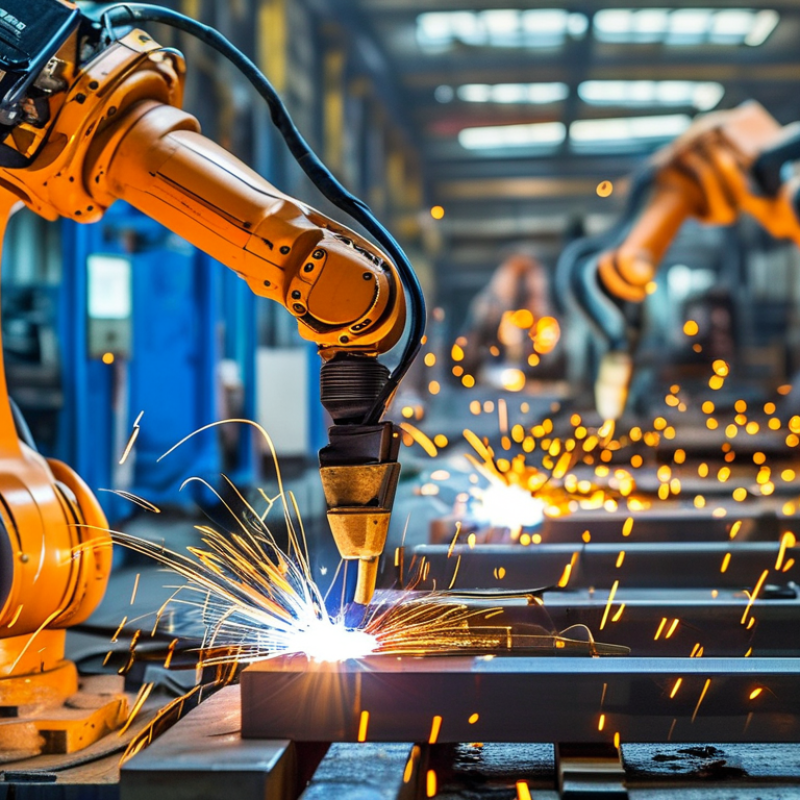
The use of arc welding robots is transforming modern manufacturing. These robots enhance precision and productivity. According to industry reports, automating welding processes can increase production rates by up to 50%. This boost is vital in a competitive market. Consistent quality is another significant advantage. Robots execute repetitive tasks with high accuracy, reducing human error.
Cost efficiency is also notable. While the initial investment can be substantial, the long-term savings are impressive. A report from the International Federation of Robotics indicates that robot integration leads to a 20% reduction in overall operational costs. Businesses often find that these savings offset initial expenditures quickly.
However, not every operation is suited for automation. Some tasks may still require human oversight. Complex parts or unforeseen issues can challenge robotic processes. Continuous training and adaptation are essential. Companies need to assess their specific needs before making a leap. Embracing technology can yield great rewards, but careful planning is key.
Key Advantages of Automation: Increased Efficiency and Productivity
Arc welding robots bring substantial benefits to manufacturing processes. One of the primary advantages is increased efficiency. These robots can operate continuously, unlike human workers who need breaks. This ability ensures that production lines run at maximum capacity for longer periods.
In addition, welding robots deliver consistent quality in their work. They follow precise instructions without deviation. This consistency minimizes errors and rework. Every weld is performed with the same speed and strength, which is crucial for maintaining product integrity. It’s essential to note, however, that setting up these systems requires initial investment and training.
Despite their effectiveness, there can be a learning curve associated with operation. Workers may need time to adapt to new technologies. Organizations should prepare for this transition carefully. Overall, while challenges exist, the potential for enhanced productivity and reliability in manufacturing makes arc welding robots a compelling choice.
Cost Analysis: Long-Term Savings with Arc Welding Robots
When considering manufacturing solutions, the cost analysis of using an arc welding robot reveals significant long-term savings. These robots can perform repetitive welding tasks with high precision. This consistency reduces material waste and enhances product quality. Many manufacturers have observed a decrease in rework rates and a boost in overall efficiency.
Initial investment in an arc welding robot may seem high. However, one must consider the long-term benefits. The labor costs associated with manual welding can accumulate quickly. Over time, the automation of welding processes leads to substantial savings. Reduced downtime and improved cycle times also contribute to a healthier bottom line. Regular maintenance costs for robots are generally lower than the costs of labor.
It's essential to reflect on the transition to automation. Some companies may hesitate, fearing challenges in implementation. A learning curve exists, and not all staff may be prepared to adapt. However, investing in training can alleviate these concerns. The shift toward automation is an essential step for modern manufacturing. Recognizing the flaws in manual processes can guide companies toward more sustainable practices.
Cost Analysis: Long-Term Savings with Arc Welding Robots
This chart illustrates the financial impact of investing in an arc welding robot. The initial investment is balanced out by significant long-term savings, including reduced operating and labor costs over a five-year period.
Precision and Quality Control: Improving Weld Quality with Robotics
Precision and quality control are vital in manufacturing. Arc welding robots enhance weld quality through consistent, repeatable processes. Human welders might tire or lose focus, leading to variations in welds. Robots, on the other hand, perform each task identically, ensuring uniformity. This reduces the chances of defects and improves overall product reliability.
Another important factor is the attention to detail. An arc welding robot can adjust its parameters in real-time, accounting for changes in material thickness or type. Such adaptability can be difficult for a person, who might not notice subtle shifts. However, robots are programmed to detect these nuances, which leads to tighter tolerances and superior weld integrity. Yet, there's a learning curve involved. Operators need training to interpret the data from these machines effectively.
Robots also help minimize waste. By producing high-quality welds, companies can reduce rework and scrap materials. However, it’s not a complete solution. Unexpected issues, like equipment malfunctions, can still arise. Continuous evaluation and adaptation to these challenges remain essential for maintaining quality over time. Achieving perfect welds is a journey rather than a destination, emphasizing the balance between technology and human oversight.
Why Choose an Arc Welding Robot for Your Manufacturing Needs?
| Dimension |
Robotic Arc Welding |
Traditional Welding |
| Weld Consistency |
High |
Variable |
| Production Speed |
Faster |
Slower |
| Operational Costs |
Lower in Long Term |
Higher |
| Skill Requirement |
Minimal |
High |
| Safety |
Increased Safety |
Riskier |
Industry Adoption Trends: Statistics on Automation in Welding Processes
The rise of automation in welding processes is evident in recent industry trends. According to various studies, 70% of manufacturers now utilize some form of automation. This adoption reflects a growing awareness of efficiency and accuracy. Many companies report improved consistency in weld quality, reducing the margin for error.
However, the transition to automated systems can pose challenges. Training staff to work alongside robots is often necessary and can take time.
Statistics show that the demand for arc welding robots is increasing rapidly. In fact, usage rates have doubled in the last five years. Many welders find themselves needing to adapt early. The technology promises faster production and lower labor costs. Yet, some still have doubts about reliability and the impact on jobs. Balancing automation and skilled labor remains a crucial conversation in the industry.
Not all companies experience flawless integration of robotic systems. Some encounter logistical hurdles and software issues. These challenges highlight the importance of proper planning and expert consultation. Companies must consider their specific needs before making significant investments. A thoughtful approach can ensure that the benefits of robotic welding outweigh the drawbacks.