How to Choose the Best Pre Structured Building for Your Project?
In recent years, the construction industry has seen a significant rise in the popularity of Pre Structured Buildings. According to a report by McKinsey, modular construction can reduce time by up to 50% compared to traditional methods. This efficiency makes Pre Structured Buildings an attractive option for various projects, from commercial spaces to residential units.
When selecting the right Pre Structured Building, several factors come into play. Material quality, design flexibility, and sustainability are critical. However, many clients struggle to align their needs with available options. A report from the World Green Building Council highlights that over 50% of buildings worldwide will be energy-efficient by 2030. This statistic emphasizes the growing importance of sustainability in construction choices.
While the benefits are clear, challenges remain. Not all suppliers meet the same standards. It's essential to research thoroughly and ask the right questions. The goal is not just to save time or costs but to ensure quality and longevity in your building project. A well-chosen Pre Structured Building could define your project's success.
Understanding Your Project Requirements for Pre-Structured Buildings
Understanding your project requirements is crucial when selecting a pre-structured building. Begin by defining the purpose of the building. Is it a warehouse, office, or perhaps a retail space? Each type has unique specifications. Consider the size you need. A small warehouse might require different structural elements than a large industrial space. Think about the layout as well. Open spaces versus segmented areas will influence the design.
Next, evaluate the environmental factors. Local climate impacts building materials. In areas prone to snow, you need a stronger roof. If the location is windy, consider wind-resistant designs. Site conditions also matter. Is the ground level? Sloped land might require additional support.
Finally, budget constraints cannot be ignored. The cheapest option is not always the best. Some structures may seem affordable but could lead to future issues. Reflect on the long-term costs. Inadequate planning could result in higher maintenance fees down the road. Allocate funds wisely to avoid regrets. Balancing all these aspects ensures you select the right pre-structured building that truly meets your needs.
Pre-Structured Building Material Preference Based on Project Requirements
This chart illustrates the preference for different materials used in pre-structured building projects according to various project requirements such as cost, sustainability, and durability.
Evaluating Different Types of Pre-Structured Buildings Available
When choosing the best pre-structured building, it's essential to evaluate the different types available. Each option serves various needs and preferences. Steel frames are popular for their durability and flexibility. They work well for warehouses and large facilities. However, they can be expensive and require careful planning.
Wooden structures offer warmth and aesthetic appeal. They are ideal for residential and smaller commercial projects. But, they may not withstand harsh weather as effectively as steel. Think about your climate and long-term maintenance costs.
Tips: Consider your project's purpose. Will it need to expand in the future? Understanding your long-term vision is crucial. Research local building codes; they can affect material choices. You might find certain structures easier to permit than others.
Ultimately, the best choice reflects your unique requirements. Avoid rushing into a decision. Test different options and ask questions. Sometimes, the traditional route isn’t the best. Embrace imperfections and learn during your selection process.
Key Features to Consider in Pre-Structured Building Selection
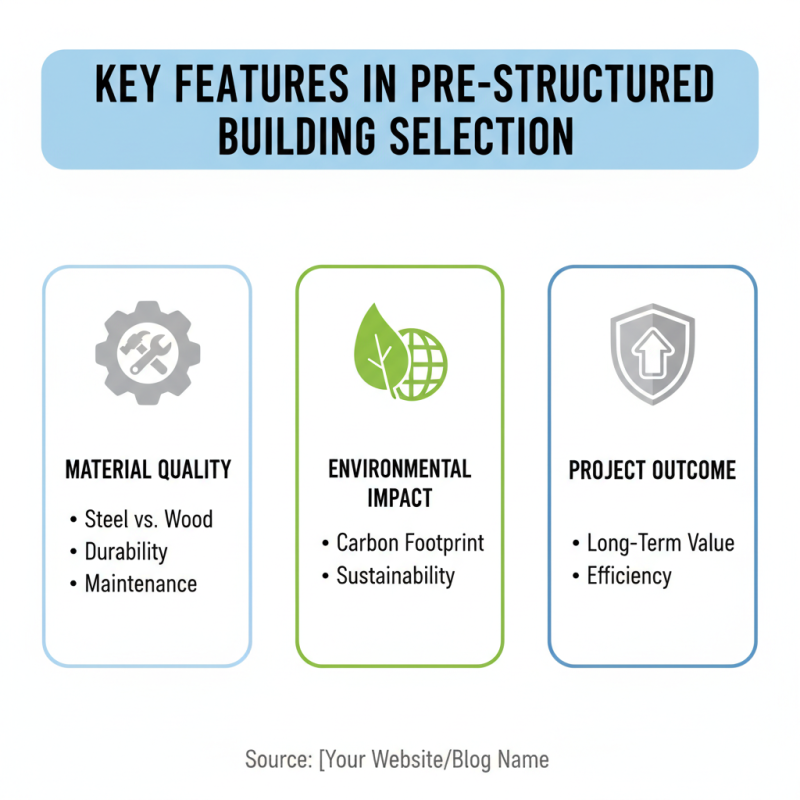
When choosing a pre-structured building for your project, consider essential features that can significantly impact your outcome. Start with the material quality. Steel and wood are common, but they vary greatly in durability and maintenance. Evaluate the environmental impact as well. Some materials may have a higher carbon footprint. This choice can affect the project's sustainability.
Next, think about customization options. Many pre-structured buildings come with standard designs. However, your project might require unique configurations. Some manufacturers may not accommodate specific requests. This limitation could hinder functionality. Also, examine the insulation properties. Good insulation saves energy and enhances comfort. Poorly insulated structures can lead to high energy costs.
Finally, consider the structural integrity. Some pre-structured options may look appealing but lack robustness. Ensure the design meets local building codes. Skipping this step can result in costly modifications later. Evaluate the manufacturer’s reputation too. Reviews and testimonials can provide insights, but they aren’t always comprehensive. Every project is different, and your needs should guide your selection.
Assessing Cost and Budget Implications for Your Pre-Structured Building
When considering a pre-structured building for your project, cost and budget are crucial factors. A recent industry report indicates that roughly 30% of construction budgets go to design and engineering. Misestimating these expenses can lead to significant financial strain. It’s essential to have a detailed budget plan, accounting for materials, labor, and any unforeseen costs that may arise during construction.
Tips: Review your project scope early. Get multiple quotes from suppliers and contractors. This will help avoid unexpected spikes in costs.
Budgeting for pre-structured buildings also involves understanding long-term maintenance. The initial cost may seem appealing, but fluctuating material prices can impact overall expenses. For instance, steel prices rose by 15% last year, making it vital to account for future market changes in your budget. Delaying decisions may lead to higher costs later. Many assume that a lower upfront cost equals long-term savings; this is not always the case.
Tips: Research historical price trends. They can provide insight into potential future costs. Keep a flexible budget to adapt to changing prices.
How to Choose the Best Pre Structured Building for Your Project? - Assessing Cost and Budget Implications for Your Pre-Structured Building
| Building Type |
Estimated Cost ($) |
Size (sq ft) |
Construction Time (months) |
Maintenance Cost Per Year ($) |
| Commercial Steel Building |
150,000 |
5,000 |
6 |
2,500 |
| Modular Office Building |
80,000 |
3,000 |
4 |
1,200 |
| Industrial Warehouse |
200,000 |
10,000 |
9 |
4,000 |
| Retail Store |
120,000 |
4,000 |
5 |
2,000 |
| Agricultural Barn |
60,000 |
6,000 |
3 |
1,000 |
Identifying Reliable Suppliers and Manufacturers for Your Project
Choosing the right pre-structured building for your project hinges on selecting reliable suppliers and manufacturers. According to a recent industry report, 75% of project delays stem from supply chain issues. Thus, identifying trustworthy partners is essential. Conducting thorough research can save you time and headaches down the line.
Look for suppliers with established reputations. Analyze customer reviews and seek out references. A recent study indicated that 60% of clients reported better outcomes when working with recognized suppliers. Consider attending trade shows or industry conferences. Networking with other professionals provides insights into the best options available.
Evaluate potential manufacturers carefully. Check their certifications and standards. Some may claim compliance without proper documentation, which can lead to costly setbacks. Ensure they can meet your project's specific needs. A flexible and responsive manufacturer may serve you better than one that simply ticks boxes. Remember that experiences vary widely. Learning from both successes and failures can enhance your decision-making process.