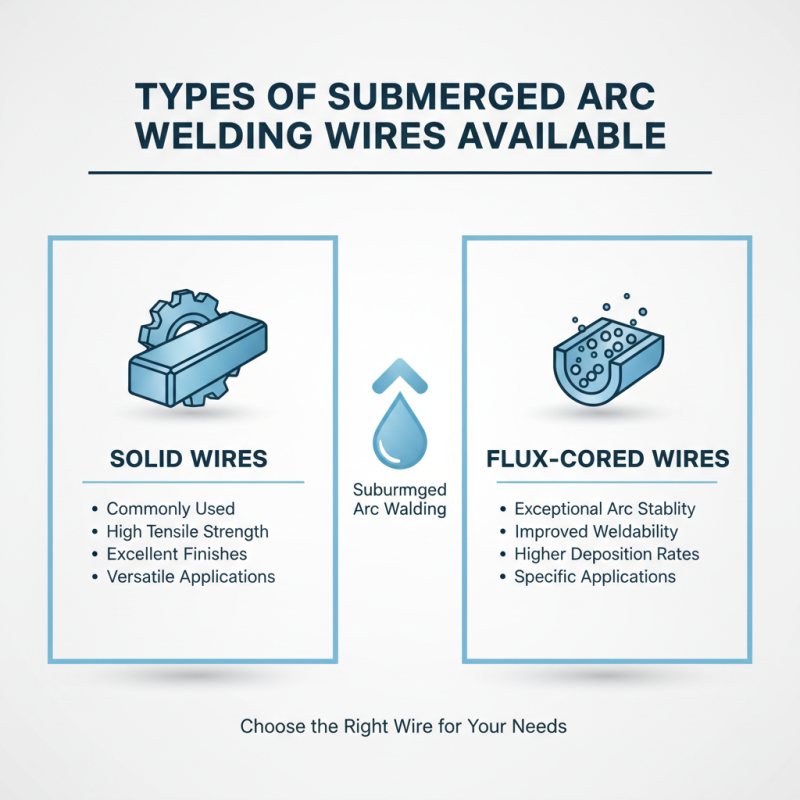
How to Choose the Right Submerged Arc Welding Wire?
Selecting the right Submerged Arc Welding Wire is critical for achieving high-quality welds. This process involves understanding the specific requirements of your project. According to a report by the American Welding Society, improper selection can lead to defects in the weld, affecting structural integrity. An industry expert, Dr. John Schmidt, states, "Choosing the appropriate Submerged Arc Welding Wire is essential for optimal performance."
Welding wire can vary greatly in composition and characteristics. Each type is designed to meet specific applications and material types. Failure to match the right wire with the base metal may result in issues such as cracking and poor fusion. In a study, it was noted that nearly 30% of weld failures were linked to the incorrect choice of welding wire.
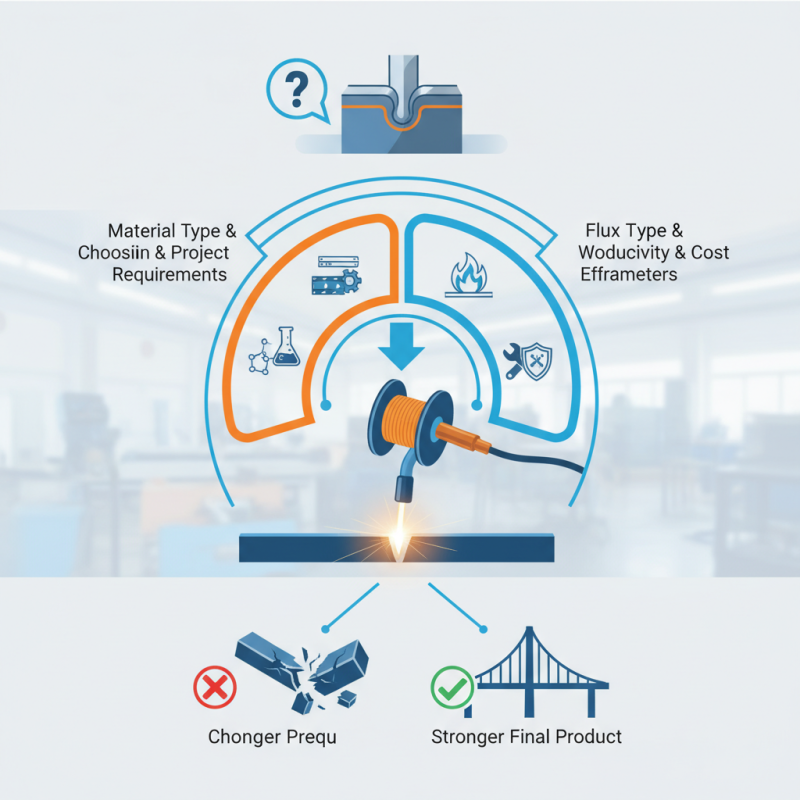
It’s also important to consider factors such as flux type and welding parameters. These elements play a significant role in the overall quality of the weld. A misstep in selection can lead to rework and increased costs. The right choice of Submerged Arc Welding Wire can enhance productivity and ensure a stronger final product. Therefore, understanding the nuances in your selection process is vital.
Understanding the Basics of Submerged Arc Welding (SAW)
Submerged Arc Welding (SAW) is a highly efficient welding method. It uses a granular flux to protect the weld pool from contamination. This technique can produce deep welds in thick materials, often exceeding 1 inch in depth. According to the American Welding Society, SAW can achieve welding speeds up to 100 inches per minute, offering significant productivity.
Understanding the basics of SAW is crucial when selecting welding wire. Not all wires are created equal. A study by the Lincoln Electric Company found that the choice of wire affects the mechanical properties of the weld. Different wires yield different tensile strengths and ductility. This fact underscores the need for careful selection based on application and material type.
However, there are challenges. Not every project requires high-speed welding. Sometimes, a slower approach provides better quality. Additionally, manufacturers may misrepresent wire specifications. This can lead to unexpected results in actual applications. Awareness of these potential mismatches is vital for welders aiming for excellence. It reinforces the old adage: a good welder understands both material and method.
How to Choose the Right Submerged Arc Welding Wire?
| Welding Wire Type |
Wire Diameter (mm) |
Material Type |
AWS Classification |
Typical Applications |
| ER70S-6 |
1.2 |
Mild Steel |
AWS A5.18 |
Structural Steel Fabrication |
| E309L |
1.6 |
Stainless Steel |
AWS A5.4 |
Welding of Dissimilar Metals |
| E71T-1 |
1.0 |
Flux-Cored Wire |
AWS A5.20 |
Heavy Fabrication |
| E2209 |
1.0 |
Dissimilar Joint Wire |
AWS A5.9 |
Chemical and Petrochemical Industries |
| ER5356 |
1.2 |
Aluminum Alloy |
AWS A5.10 |
Marine and Automotive Applications |
Key Factors Influencing the Selection of Welding Wires
Selecting the right submerged arc welding wire involves several key factors that directly impact performance and efficiency. One critical aspect is the chemical composition of the wire. According to data from the American Welding Society, wires with high manganese and silicon content can enhance arc stability. Such elements also improve weld pool fluidity, which is essential in achieving smooth welds.
Another important factor is the mechanical properties of the wire. Different applications require distinct strength and ductility levels. For instance, structural steel welding may demand wires with higher tensile strength. Industry reports indicate that using wires tailored to specific material grades can prevent defects like cracking. Not addressing this can lead to costly repairs.
Welders should also consider the wire diameter. A wider diameter often allows for faster travel speeds but requires higher current levels. Many operators overlook this aspect, leading to inconsistent weld quality. Additionally, the choice of flux paired with the wire affects penetration and deoxidation. Not all combinations yield optimal results, making experimentation vital for refinement.
Evaluating the Compatibility of Welding Wire with Base Materials
Choosing the right submerged arc welding wire involves understanding its compatibility with the base materials. Different base metals require specific welding wires to achieve optimal strength and integrity. For instance, a report from the American Welding Society states that using mismatched wires can lead to a drop in tensile strength by up to 30%. This highlights the importance of careful selection.
When evaluating welding wires, consider factors like chemical composition and mechanical properties. The joint should not only withstand external pressure but also resist fatigue. A recent study found that suitable alloys can improve toughness significantly. Some welds failed due to poor wire selection, showing cracks at lower thresholds than anticipated.
Real-world applications often reveal gaps in compatibility analysis. A mismatch during the welding process might not be immediately visible but can compromise long-term performance. It’s crucial to test welded joints under actual service conditions to ascertain their reliability. Without proper evaluation, the risk of unexpected failures increases, leading to costly repairs. Aim for a thoughtful approach to wire selection for better structural integrity.
Welding Wire Compatibility with Base Materials
Assessing the Performance and Quality of Welding Wires
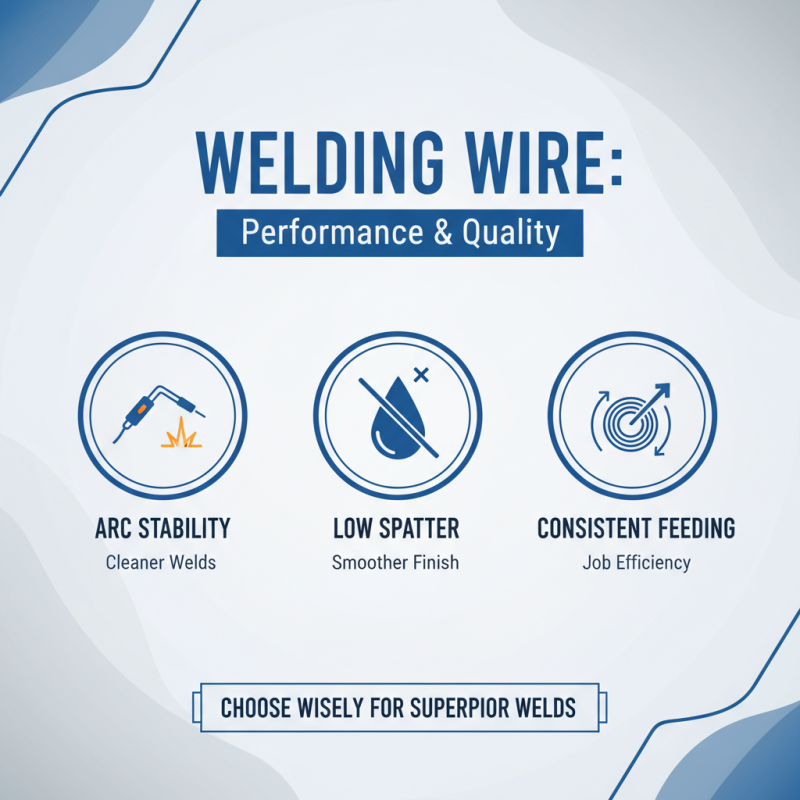
When selecting submerged arc welding wire, performance and quality are key factors. The wire should exhibit excellent arc stability and low spatter levels. Both of these characteristics lead to cleaner welds. You may notice some wires struggle with consistent feeding, which can disrupt the welding process. Choosing a wire that maintains its integrity is essential for job efficiency.
Quality often correlates with the wire’s chemical composition. Different materials will affect strength and ductility. Some wires may show signs of oxidation, which can compromise the weld. Inspecting the wire for visible defects is crucial. However, sometimes you might overlook minor flaws until they affect your work. Reassessing the wire's performance during use can help identify if it meets your needs over time.
Welding tests can provide insights into the wire's behavior under different conditions. Check for issues like poor penetration or inconsistent bead profiles. Such problems might lead to rework, wasting both time and resources. Remember, the choice of welding wire can make a significant difference in overall productivity. Each weld should reflect careful consideration of the wire’s attributes and performance in real-world conditions.