How to Choose the Right Arc Welding Robot for Your Business Needs?
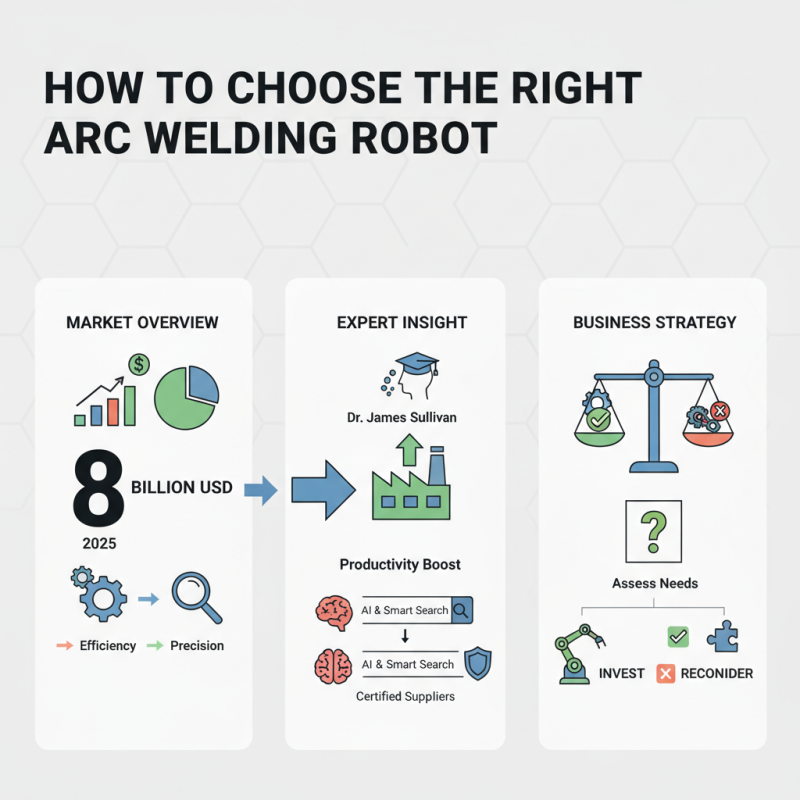
In today's competitive manufacturing landscape, choosing the right Arc Welding Robot is crucial. According to a recent industry report, the global arc welding robot market is projected to reach $8 billion by 2025, reflecting a strong demand for automation. This increase is driven by the need for efficiency and precision in production processes.
Renowned expert in robotic automation, Dr. James Sullivan, emphasizes, "Investing in the right Arc Welding Robot can dramatically improve a company's productivity." With advancements in AI, smart search features enable businesses to identify suppliers with essential certifications, boosting operational efficiency.
However, not all robots fit every business model. Assessing your specific requirements is essential before making an investment. While automation offers great benefits, careful consideration is necessary to avoid potential missteps. Companies must weigh the advantages against their unique challenges to ensure effective integration of Arc Welding Robots into their operations.
Understanding Arc Welding Robotics and Their Applications
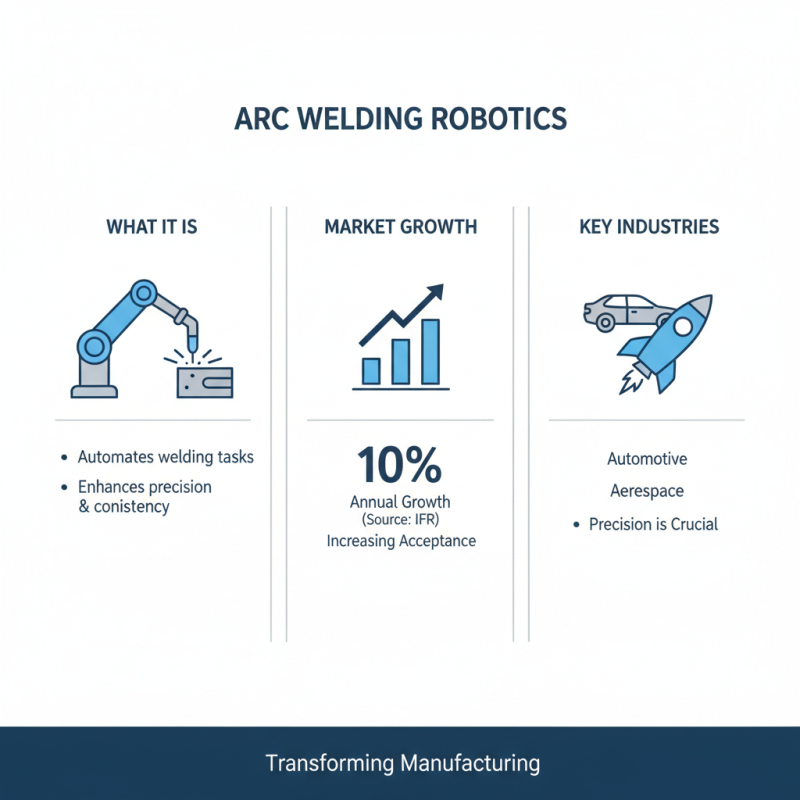
Arc welding robotics has transformed the manufacturing landscape. This technology automates welding tasks, enhancing precision and consistency in production. Reports from the International Federation of Robotics suggest that the arc welding robot market is expected to grow by 10% annually. Such growth indicates increasing acceptance in various industries like automotive and aerospace, where precision is crucial.
Many businesses apply arc welding robots for complex parts. These robots excel in high-volume production, reducing lead times and labor costs. However, companies often face challenges in integrating these systems. Training employees to operate and maintain the robots can be a hurdle. Some manufacturers report a steep learning curve. This reflects the need for a well-structured training program.
Moreover, while automated systems promise efficiency, they may not replace human intuition entirely. Human oversight remains key in quality control. Many organizations find that combining human skills with robotic capabilities yields the best results. There may be instances where robots fall short, especially in unpredictable environments. Balancing automation with human ability can enhance productivity. Companies should weigh these elements carefully when adopting arc welding robots.
Key Factors to Consider When Selecting an Arc Welding Robot
When selecting an arc welding robot, several key factors demand attention. Productivity is crucial. According to a report by ABB, robotic welding systems can increase productivity by up to 30%. A machine that efficiently handles repetitive tasks is invaluable. Must the robot work in high-speed environments? A suitable choice would enhance throughput and reduce downtime.
Another factor is flexibility. Different projects may require varied welding techniques. A versatile robot can adapt to these needs, handling a range of materials. Reports indicate that 70% of manufacturers look for robots capable of easy programming and adjustment. Simplicity in operation is vital. Complexity can lead to operational delays.
Cost is always a consideration. While initial investments can be high, the long-term return should justify this. An analysis by PwC estimates that automation lowers labor costs by 20-25%. However, the maintenance and potential downtime must also be planned for. Choosing the right robot involves more than just the upfront price; it should align with future goals and scalability. Reflecting on these factors can lead to better decisions.
Arc Welding Robot Selection: Key Considerations
This bar chart represents the key factors and their importance ratings when selecting an arc welding robot. The factors considered are Cost, Speed, Payload Capacity, Flexibility, and Ease of Programming, rated on a scale from 1 to 10.
Evaluating the Technical Specifications of Welding Robots
When choosing an arc welding robot, the technical specifications are crucial. Payload capacity is one important factor. It defines how much weight the robot can lift. If it’s too low, you may struggle with heavier components. Pay attention to the reach and working envelope. This determines how far the robot can operate without needing to reposition.
Another key aspect is the welding speed and precision. Different materials require varying speeds and heat input. A robot that can't adapt may lead to inconsistent weld quality. Arc accuracy is vital for joining parts correctly. Some robots have advanced sensors for better feedback. However, not all systems guarantee reliable performance.
Consider the software capabilities too. User-friendly interfaces make programming easier. Complicated systems can hinder productivity. Choose a robot that fits the existing workflows of your business. Think about integration challenges. Sometimes, older systems may not play well with new technology. Taking time to evaluate these specifications can save you headaches later on.
Budgeting for Your Arc Welding Robot: Costs and ROI
When budgeting for an arc welding robot, consider both initial costs and long-term ROI. Reports show that companies can see ROI within 12 to 18 months after investing in these robots. Typically, the costs can range from $40,000 to $100,000 depending on the capabilities and features chosen. Keep in mind that maintenance and training costs also play significant roles in your budget.
Tips: Analyze your current workload. If demand fluctuates, ensure the robot's capabilities align with both peak and low periods.
It's important to reflect on the less glamorous aspects of this investment. Some businesses find that the employees need time to adjust. Training can be an unexpected cost. Use this as an opportunity to upskill your workforce. Investing in training can create a more versatile team.
Tips: Conduct a cost-benefit analysis. Identify how much time and resources automation will save over manual welding tasks. This can help you justify the initial investments.
How to Choose the Right Arc Welding Robot for Your Business Needs? - Budgeting for Your Arc Welding Robot: Costs and ROI
| Model |
Cost (USD) |
Payload Capacity (kg) |
Reach (mm) |
ROI Period (Months) |
| Basic Model A |
$20,000 |
100 |
1500 |
12 |
| Advanced Model B |
$35,000 |
150 |
2000 |
18 |
| Premium Model C |
$50,000 |
300 |
2500 |
24 |
| High-End Model D |
$75,000 |
500 |
3000 |
30 |
Integrating the Robot into Your Existing Manufacturing Workflow
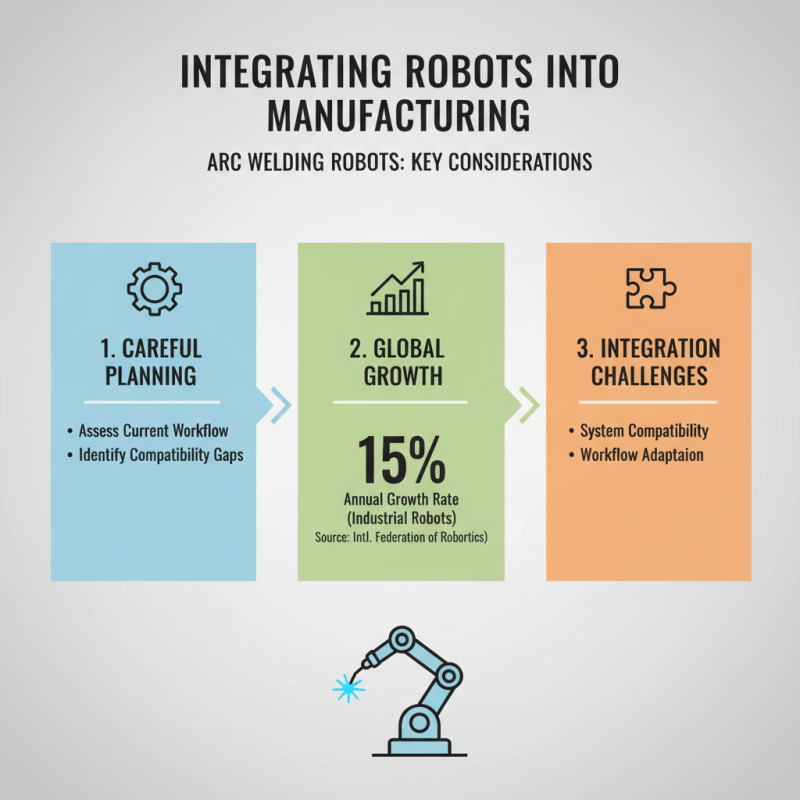
Integrating an arc welding robot into your existing manufacturing workflow requires careful planning. According to a report from the International Federation of Robotics, the global demand for industrial robots is increasing, with an expected growth rate of 15% annually. The integration process may present challenges, particularly regarding compatibility with current systems.
Workflows should be evaluated to identify bottlenecks. If the robot cannot streamline operations, it may not be worth the investment. Take note of safety protocols as well. In a study, 65% of manufacturers reported concerns about integrating robots with human workers. Training is essential to ensure smooth collaboration. Without proper education, workers may resist the change.
Data shows that companies successfully integrating robots see productivity increases of around 30%. However, this doesn’t come without its hiccups. Regular maintenance and updates can be a hassle. Additionally, staff may need time to adapt, potentially leading to initial decreases in efficiency. Balancing the benefits against these challenges is crucial for a successful transition.