inquiry
Leave Your Message

How to Select the Right Structural Metal Beams for Your Project?

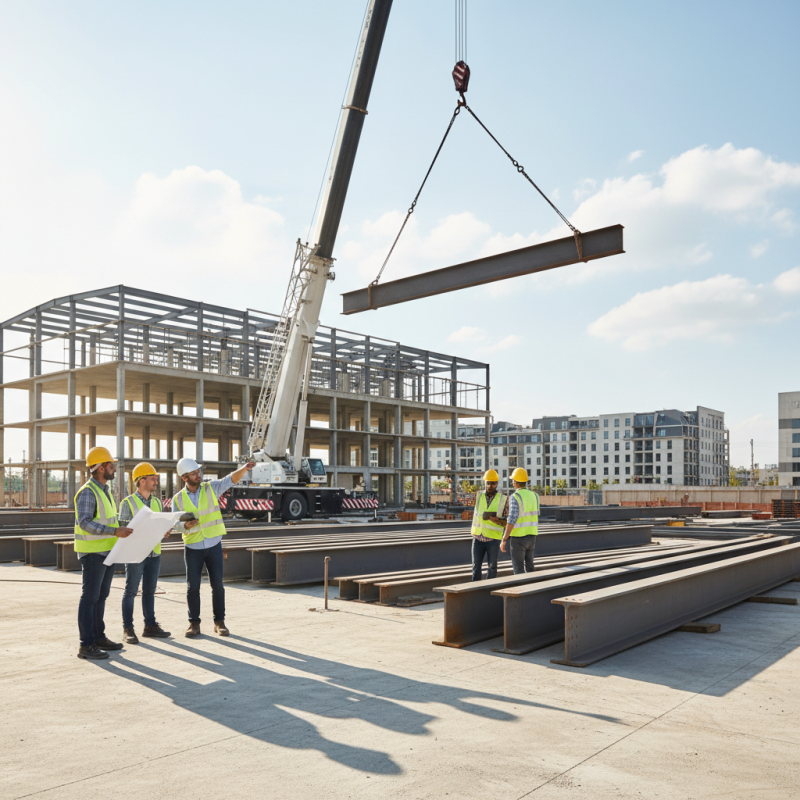
Choosing the right structural metal beams for your project is crucial. These beams play a vital role in ensuring stability and safety. Understanding the various types of structural metal beams available is essential for effective decision-making.

When selecting structural metal beams, consider the load requirements. Weight distribution affects the type of beam you need. There are several options, such as I-beams and H-beams. Each type has unique benefits and drawbacks. Assess your project's specific needs carefully.

Reliability and safety are non-negotiable in construction. Working with a qualified engineer is advisable. They can help you navigate complexities. Always question your choices and seek expert guidance. The stakes are high, and mistakes can be costly. Selecting the right structural metal beams requires thoughtfulness and precision.
How to Select the Right Structural Metal Beams for Your Project?

Understanding the Basics of Structural Metal Beams and Their Applications

Structural metal beams play a crucial role in construction. Understanding their types and applications is essential for any project. Beams made from steel or other metals are designed to bear loads and provide stability. Research from the American Institute of Steel Construction (AISC) shows that steel beams can support heavier loads than wood beams of the same size. This strength makes them ideal for large commercial buildings and bridges.

When selecting metal beams, consider factors like load capacity and span length. For example, a wide-flange beam often suits projects requiring significant support over long distances. According to a report by the National Institute of Standards and Technology (NIST), using the right beam can enhance energy efficiency in buildings. Poorly selected beams may not optimize this aspect, leading to increased costs and energy waste.

Another aspect to reflect on is cost versus durability. Sometimes, cheaper metal beams may require more maintenance over time. A study shows that the lifecycle costs of using higher-quality beams are often lower despite the initial investment. Paying attention to details like corrosion resistance can save money in the long run. Balancing these factors is key to creating an efficient and durable structure.


Key Properties of Structural Metal Beams: Strength, Durability, and Weight

When selecting structural metal beams, understanding key properties is crucial. Strength is the primary consideration. It dictates how much load a beam can support without bending or breaking. Engineers often assess yield strength and tensile strength. These measurements indicate the material's ability to withstand forces.

Durability follows closely behind. Metal beams must resist corrosion, especially in outdoor environments. Factors like humidity and exposure to chemicals can greatly affect their lifespan. Choosing a galvanized or composite beam can enhance resistance against the elements. However, this choice may come with a higher initial cost.

Weight matters too. Lighter beams can facilitate easier handling and installation. However, they may not always provide the necessary strength for heavy-duty applications. Engineers must balance weight with structural requirements. Designing with efficiency in mind can prevent unnecessary material use but requires careful planning. Reflecting on your project’s needs is essential for making the right selection.

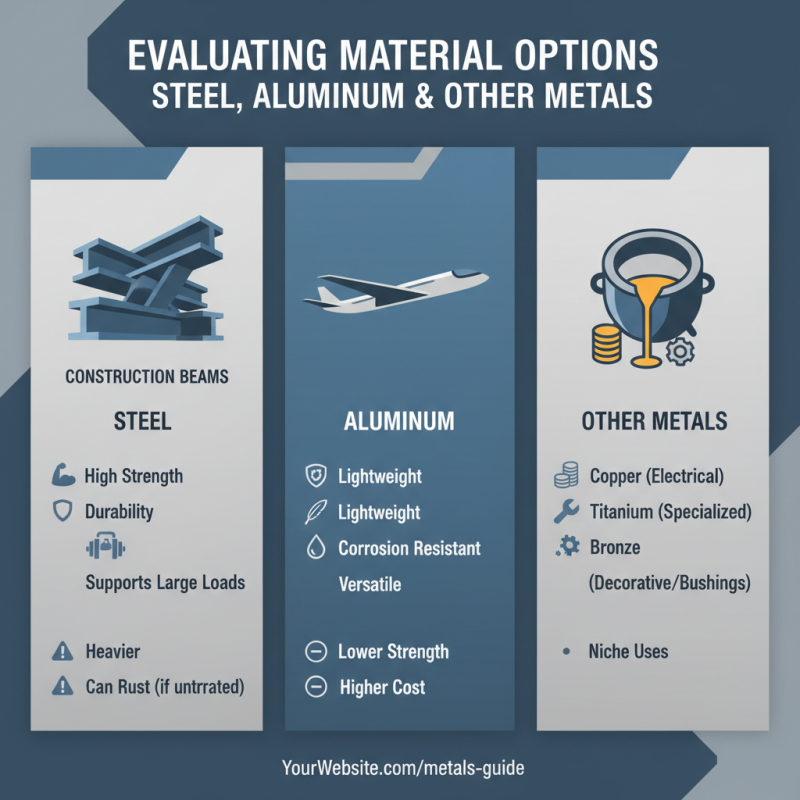
Evaluating Material Options: Steel, Aluminum, and Other Metals

How to Select the Right Structural Metal Beams for Your Project?

Selecting the right metal beam is essential for any construction project. Steel, aluminum, and other metals each offer unique advantages. Steel is known for its high strength and durability. It can support large loads and withstand harsh environments. However, it is heavier and can rust if not properly treated.

Aluminum is lighter and resistant to corrosion, making it ideal for specific applications. It is often used in projects requiring reduced weight. Nonetheless, aluminum usually has a lower load-bearing capacity than steel. It's important to evaluate the specific needs of your project before making a choice.

**Tips:** Evaluate the weight requirements of your structure. Lighter materials can save on transportation costs but may compromise stability. Consider environmental factors, too. For example, in coastal areas, corrosion resistance becomes a critical component of your decision. Always consult with a structural engineer to ensure your choice meets safety standards and project needs. Remember, every material has its limits, and overlooking them could lead to structural issues.

Load-Bearing Capacity: Calculating Requirements for Your Project

When selecting structural metal beams, load-bearing capacity is crucial. You need to calculate the requirements for your project accurately. According to the American Institute of Steel Construction, the load capacity depends on beam size, shape, and material strength. Proper calculations ensure that your beams can handle the intended loads without risk of failure.

For instance, a simply supported beam can typically carry loads calculated using the formula: \( M = \frac{wL^2}{8} \). Here, \( M \) stands for moment, \( w \) is the uniform load, and \( L \) represents the span length. The American Society for Testing and Materials (ASTM) provides standards that help gauge material properties. These guidelines can vary based on project specifics, leading to different requirements.

Attention to detail is necessary when determining beam specifications. Suboptimal calculations can lead to structural weaknesses. It's important to consult with experienced engineers or use professional software for precise load assessments. Taking a measured approach will help safeguard the integrity of your project and prevent costly future modifications. Always be cautious with your assumptions.

How to Select the Right Structural Metal Beams for Your Project? - Load-Bearing Capacity: Calculating Requirements for Your Project

Beam Type Material Span Length (ft) Load Capacity (lbs) Weight (lbs/ft)
W8x10 Steel 10 4400 10
W10x12 Steel 12 5800 12
W12x14 Steel 14 7080 14
S10x5 Aluminum 10 3200 5
W6x9 Steel 8 3000 9
I-beam Steel 16 9000 15

Cost Considerations and Budgeting for Structural Metal Beams in Construction

When budgeting for structural metal beams, understanding costs is essential. Material selection significantly impacts overall expenses. Steel beams, for instance, are often favored for their strength but can vary widely in price based on quality and sourcing. Custom cuts and finishes may add to the budget, so plan accordingly.

Labor costs also play a vital role. Skilled workers are required for installation, which can drive expenses higher. Consider the project’s scope and timeline. Delays can inflate costs. Always factor potential changes in design, which may require additional beams or alterations.

Be wary of hidden costs. Waste and disposal of materials can add up. Evaluate suppliers carefully to avoid unexpected fees. Communicating with engineers can help align your vision with realistic budgeting. Encourage feedback during the budgeting phase. It’s wise to remain flexible, as adjustments may be necessary.