How to Choose the Best Arc Welding Robot for Your Needs?
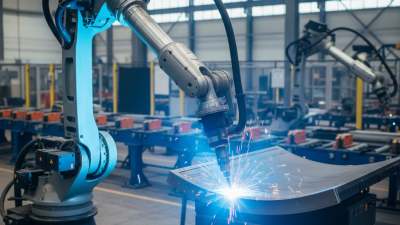
Choosing the right Arc Welding Robot is critical for modern manufacturing. In 2021, the global market for welding robots was valued at approximately $4.4 billion and is expected to grow significantly. Efficiency and precision are essential, yet many companies struggle to select suitable robots for their specific needs.
Arc welding robots can greatly enhance productivity, but the decision process often lacks thorough analysis. Businesses may overlook critical factors such as payload capacity and joint design. Many manufacturers report challenges in integration and programming, which can lead to increased costs. Data shows that 30% of robotic installations fail to meet performance expectations, highlighting the need for careful planning.
Ultimately, understanding the various features of Arc Welding Robots is essential. From sensing technology to software compatibility, every detail matters. Organizations must evaluate their long-term goals and current capabilities. A hasty decision can lead to wasted resources and diminished returns. Investing time and effort in selecting the right robot pays off, creating a significant competitive advantage.
Understanding Your Welding Requirements and Applications
Choosing the right arc welding robot involves understanding specific welding requirements and applications. The welding industry is constantly evolving, with estimates predicting the global market to reach $30 billion by 2025. This growth emphasizes the importance of selecting a robot that meets unique production needs.
Consider the types of materials you will be welding. Different metals require various welding processes. For instance, stainless steel and aluminum may need distinctive approaches. An analysis from the Welding Institute indicates that nearly 40% of manufacturers report inadequate material compatibility as a major hurdle in achieving optimal weld quality.
Tips: Always assess your material properties first. A mismatch can lead to increased costs and rework. Explore robotic capabilities such as welding speed and precision. Some robots excel in large-scale production, while others perform better in intricate applications.
Reflect on your production volume as well. Automating high-volume welding can significantly reduce cycle times and labor costs. However, if production is low, investing in a sophisticated robot might not yield immediate benefits. According to industry reports, 30% of companies struggle with over-investment in technology that doesn’t meet their needs.
Tips: List your production goals clearly. This will guide your selection process and help avoid potential pitfalls.
Evaluating Robot Specifications and Features
When choosing an arc welding robot, detailed specifications matter greatly. Look at payload capacity, which determines how much weight the robot can manipulate. A higher payload allows for versatility in projects. The reach is also crucial; it influences how far the robot can operate within its workspace. A robot with a shorter reach might limit its application for larger assemblies.
Consider the types of welding processes supported by the robot. Different applications require varied techniques. Some robots excel in MIG welding, while others may be better for TIG welding. The integrated vision systems can enhance performance. They allow the robot to adjust to the position of the workpiece. Yet, malfunctioning vision systems can lead to errors.
Another aspect is the ease of programming. Some robots offer user-friendly interfaces that even beginners can navigate. However, complex systems might require advanced expertise. Additionally, regular maintenance is essential to ensure longevity and reliability. Skipping maintenance can lead to costly downtime and reduced performance. Evaluating these factors critically is vital for the successful integration of a welding robot into your operations.
Assessing Budget and Cost-Effectiveness
When considering an arc welding robot, budget plays a critical role. Assess your initial investment versus potential long-term savings. High-quality robots may cost more upfront, but they often provide greater reliability and efficiency over time. A lower price may be tempting, but hidden costs can arise from repairs or decreased productivity.
Tips: Prioritize quality over cost. Evaluate the features that matter most for your specific applications. Look beyond the sticker price to understand total cost ownership.
Evaluate ongoing expenses as well. Maintenance and operational costs can accumulate quickly. Regular upkeep can ensure your robot runs smoothly, preventing costly breakdowns. Invest in training for operators to enhance productivity and minimize errors.
Tips: Calculate your return on investment (ROI). How quickly will the machine pay for itself? Also, consider energy efficiency. A robot that consumes less power lowers long-term expenses. Remember, it's not just about the purchase price; it’s about value over time.
Considering Integration with Existing Systems
When considering the integration of an arc welding robot into existing systems, evaluating compatibility is crucial. Many businesses overlook this aspect, leading to operational inefficiencies. Reports indicate that approximately 30% of integration issues arise from mismatched systems. Understanding the specifications of your current setup can help avoid these potential pitfalls. Look for robots that can easily communicate with your existing hardware and software.
Networking capabilities are essential. Modern welding robots employ advanced communication protocols. This allows for seamless interaction. A 2021 survey revealed that companies integrating such technologies reported a 20% increase in production efficiency. However, companies must ensure their existing systems can support these advancements. Sometimes, outdated equipment can hinder the full potential of new robotic solutions.
Moreover, assessing the training requirements is vital. Employees may struggle to adapt to new systems. Industry training reports suggest that organizations providing comprehensive training see a quicker return on investment. If a robot does not mesh well with existing workflows, it can lead to delays and frustration. Prepare to invest time into aligning your team with any new technology to maximize productivity. Integrating a welding robot should not be a hasty decision; careful planning is essential for successful implementation.
Comparison of Key Factors in Choosing an Arc Welding Robot
Exploring After-Sales Support and Maintenance Options
When selecting an arc welding robot, after-sales support and maintenance are critical factors. A reliable support team can make a significant difference over time. Proper maintenance ensures efficiency and longevity, potentially saving you from costly downtime.
Consider the availability of spare parts. Some manufacturers might have long lead times. Ensure that parts are readily accessible. This decreases the risk of prolonged disruptions during operations. Programming assistance is another valuable aspect. Having knowledgeable technicians available helps when troubleshooting issues.
Tips for maintenance: Schedule regular inspections of your robot. Implement a routine cleaning process to prevent build-up. Train your staff on basic troubleshooting. This empowers them to handle minor issues quickly, improving overall productivity. Reflect on the experience of your team. Their insights can guide better choices in the long run.