Top Aluminum Wire Suppliers for Global Buyers to Consider?
In the global market, the demand for Aluminum Wire continues to rise due to its lightweight and conductive properties. Industry reports indicate that the aluminum wire market is projected to grow at a CAGR of 5.2% over the next five years. This growth is driven by advancements in electrical infrastructure and technology. According to Dr. Emily Chen, an expert in the metalworking field, "Aluminum wire is becoming the material of choice for many modern applications, fostering energy efficiency and innovation."
Many manufacturers are now focusing on improving the quality and sustainability of Aluminum Wire. Companies must navigate challenges, such as raw material prices and competition among suppliers. These dynamics can impact product availability and pricing. Despite these challenges, some suppliers excel by offering high-quality products coupled with excellent customer service.
As buyers search for reliable partners, they should consider not only pricing but also quality certifications and supply chain reliability. Engaging with reputable suppliers can ensure access to superior Aluminum Wire that meets industry standards. This approach not only mitigates risk but also fosters long-term relationships in a competitive landscape.

Overview of the Aluminum Wire Market and Its Global Demand
The aluminum wire market is experiencing significant growth. This increase stems from a rising demand across various industries. Construction, automotive, and electrical sectors are primary consumers. They rely on aluminum for its lightweight and conductive properties. As global buyers seek reliable sources, the quality of suppliers becomes crucial.
Recent trends show a shift towards eco-friendly materials. Various companies are adopting sustainable practices in aluminum production. This is essential as environmental concerns grow. Nevertheless, not all suppliers maintain these standards. Buyers must thoroughly evaluate suppliers' environmental credentials. Ill-informed decisions could lead to sourcing low-quality materials.
Understanding global demand requires awareness of regional trends. In Asia, rapid urbanization drives aluminum wire usage. In Europe and North America, modernization projects fuel the need for high-quality wiring solutions. Yet, fluctuating prices and supply chain disruptions pose challenges. Suppliers need to anticipate market changes to remain competitive. Buyers should stay informed about these dynamics to make wise purchasing decisions.
Criteria for Selecting Top Aluminum Wire Suppliers
When selecting top aluminum wire suppliers, several criteria should be prioritized. Quality is paramount. Suppliers must provide aluminum wires that meet international standards. According to the International Aluminium Institute, over 60% of aluminum production is used in electrical applications. Therefore, the conductivity and purity of the wire are crucial attributes.
The supplier's reputation in the market is also essential. Research from Statista indicates that transparency and sustainability are gaining importance for buyers. Suppliers with environmentally friendly practices demonstrate reliability. Buyers should review certifications and compliance records to assess these aspects accurately.
Cost-effectiveness must be balanced with quality. In recent studies, it was found that approximately 30% of buyers experienced quality issues due to choosing cheaper alternatives. Suppliers who offer competitive pricing while maintaining high standards can be valuable partners. Additionally, availability and lead times play a pivotal role. Buyers may face delays if suppliers lack sufficient stock or production capacity. These factors collectively shape the decision-making process for global buyers.
List of Leading Aluminum Wire Suppliers Worldwide
The aluminum wire industry has seen significant growth in recent years. According to a 2021 report by Grand View Research, the global aluminum wire market was valued at approximately USD 6.5 billion, with a projected CAGR of around 5.4% from 2022 to 2030. This reveals the rising demand for aluminum wire across various applications, including construction and automotive sectors.
Several leading suppliers offer a range of aluminum wire products, catering to diverse market needs worldwide. A variety of factors influence their performance, including manufacturing capabilities, product quality, and customer service. Industry experts insist that global buyers should carefully evaluate these aspects. For example, some suppliers may excel in high-quality output but lack a robust distribution network.
It's important to note that while many suppliers claim to provide competitive pricing, hidden costs can arise. These might stem from shipping fees or the necessity for specific certifications. Buyers often overlook these details, leading to budget overruns. Thus, conducting thorough research and comparisons can help buyers avoid pitfalls in the procurement process for aluminum wire.
Top Aluminum Wire Suppliers for Global Buyers
This bar chart displays the estimated annual production capacity (in metric tons) of various leading aluminum wire suppliers worldwide. It serves as a comparison to help global buyers understand the scale of operations among different companies in the aluminum wire market.
Comparative Analysis of Supplier Offerings and Innovation
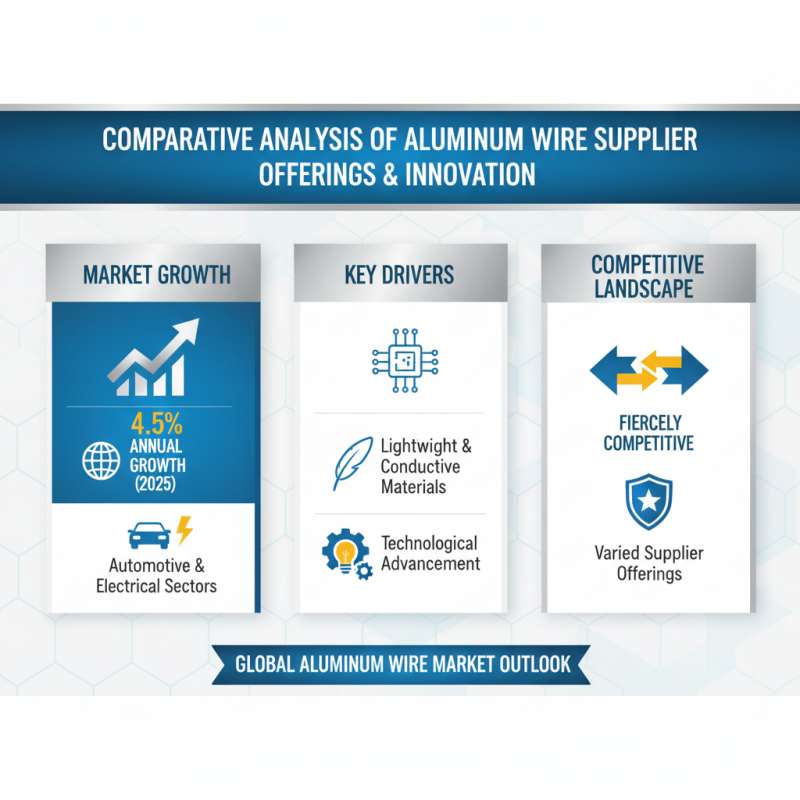
The aluminum wire market is robust, driven by innovation and varied supplier offerings. Recent industry reports indicate that global demand for aluminum wire is projected to grow by 4.5% annually through 2025. This growth can be attributed to the increasing need for lightweight and conductive materials in the automotive and electrical sectors. Suppliers are now embracing new technologies to enhance their product lines, leading to a fierce competitive landscape.
Many suppliers focus on different aspects of production, such as sustainability and efficiency. Some adopt eco-friendly practices, reducing their carbon footprint. A report by the International Aluminum Institute highlights that recycling aluminum consumes 95% less energy than producing new aluminum. Innovators in this space reflect such trends, targeting buyers who prioritize sustainability. On the other hand, not all suppliers have fully integrated these practices, leaving gaps in the market that discerning buyers should consider.
Innovation is not limited to materials alone. Many suppliers are advancing in manufacturing processes, employing automation for precision. However, the difference in quality remains stark. Some manufacturers still rely on outdated techniques, which can lead to inconsistencies in wire strength and conductivity. Buyers must actively seek detailed specifications and performance data. This diligence ensures they partner with suppliers committed to both quality and innovation in their aluminum wire offerings.
Tips for Establishing Successful Partnerships with Suppliers
Building successful partnerships with aluminum wire suppliers requires more than just a transactional relationship. Effective communication is essential. Regular updates and feedback can prevent misunderstandings. Suppliers appreciate transparency about your own needs and challenges. This fosters a reliable partnership, which is vital in the competitive aluminum industry.
Data from industry reports suggests that the global aluminum wire market is projected to grow at a CAGR of 5% from 2022 to 2027. This growth reflects increasing demand in various sectors. However, establishing a partnership during such rapid growth can be challenging. Suppliers often have varying capacities and specializations. Conducting thorough research into potential suppliers can lead to better alignment of goals and expectations.
Moreover, consider the financial stability of your partners. A study by a financial consulting firm indicated that nearly 25% of supplier failures are due to cash flow issues. Assessing this aspect can risk-proof your supply chain. It’s vital to maintain ongoing dialogue, addressing any concerns as they arise. Reflect on past experiences to identify potential pitfalls in partnerships, ensuring smoother collaboration in the future.