2026 Top Types of Submerged Arc Welding Wire for Quality Welding
In the world of welding, the choice of materials plays a crucial role. Submerged Arc Welding Wire is a key component that directly affects the quality of welds. This specific type of welding wire is renowned for its ability to produce strong, clean, and precise joints. Many professionals in the industry understand its significance, yet choosing the right wire can be a daunting task.
Not all submerged arc wires are created equal. Variations exist based on alloy compositions, sizes, and coatings. These differences can impact the final weld’s strength and appearance. Experienced welders often emphasize the importance of selecting the appropriate type based on the application. There isn’t a one-size-fits-all solution, which can lead to mistakes and subpar outcomes.
The market offers a wide array of submerged arc welding wires, each designed for specific needs. As trends evolve, staying informed is vital. Knowing which types are best for your projects can enhance quality and efficiency. However, relying solely on recommendations without thorough research may result in challenges. Reflecting on past experiences can guide future decisions, ensuring that the selected wire aligns with the desired welding objectives.
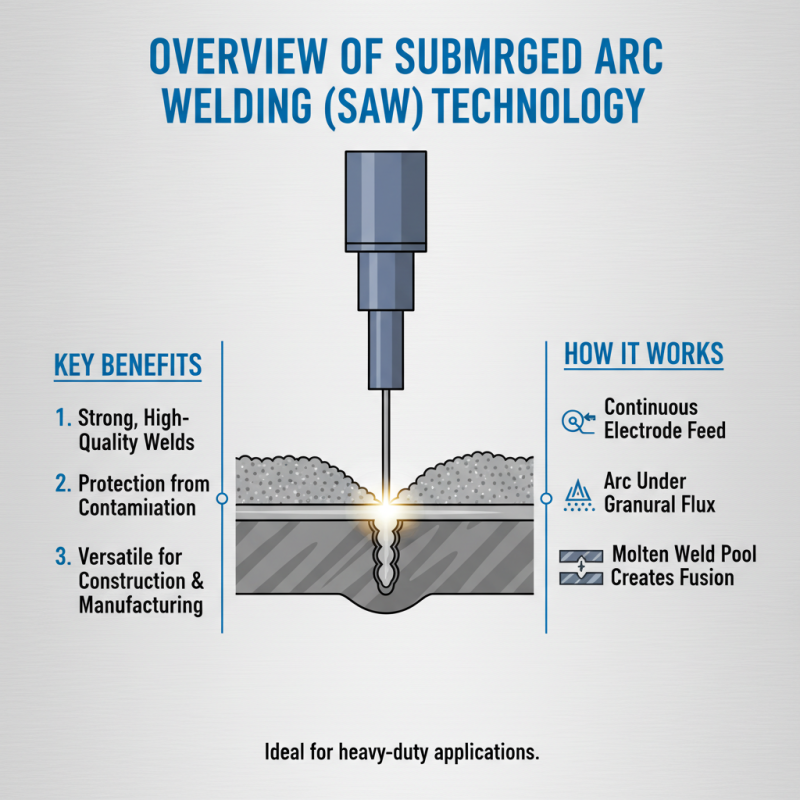
Overview of Submerged Arc Welding (SAW) Technology
Submerged Arc Welding (SAW) is a unique process that offers many benefits in construction and manufacturing. This technique utilizes an arc between a continuously fed electrode and the workpiece. A layer of granular flux covers the weld pool, protecting it from contamination. This environment results in strong, high-quality welds.
A key advantage of SAW is its efficiency. The process allows for deeper penetration and faster welding speeds. Operators can achieve impressive heat input while maintaining a clean work area. However, the need for proper flux selection is critical. Using the wrong type can lead to impurities and compromised weld integrity.
Training and experience are crucial in mastering SAW. Welders must understand the nuances of various wire types and flux compositions. This knowledge can significantly impact the welding results. Despite the automation possibilities, skilled operators are still essential for monitoring quality and making adjustments as needed. Emphasizing best practices ensures that welds not only meet but exceed quality expectations.
Key Characteristics of Quality Submerged Arc Welding Wire
When selecting submerged arc welding (SAW) wire, quality is paramount. Key characteristics include chemical composition, wire diameter, and flux compatibility. Reports indicate that the ideal wire should have a balanced mix of alloying elements. This balance influences mechanical properties, ensuring stronger welds. A common specification stipulates a carbon content of less than 0.08%. This reduces brittleness, enhancing overall durability.
Wire diameter also plays a critical role. Common diameters range from 1.2 mm to 4.0 mm. Thicker wires typically allow for higher deposition rates, but they may compromise control in tight spaces. A study from the American Welding Society shows that a majority of weld defects arise from poor wire selection. Thus, understanding the project requirements is essential.
Lastly, compatibility with different flux materials is often overlooked. Mismatched flux can lead to slag inclusions. Industry data indicates that about 15% of welding defects stem from this issue. It's key to consult technical data sheets for proper pairings. Overall, attention to these details can significantly enhance welding performance and quality.
Top 2026 Submerged Arc Welding Wire Types and Their Applications
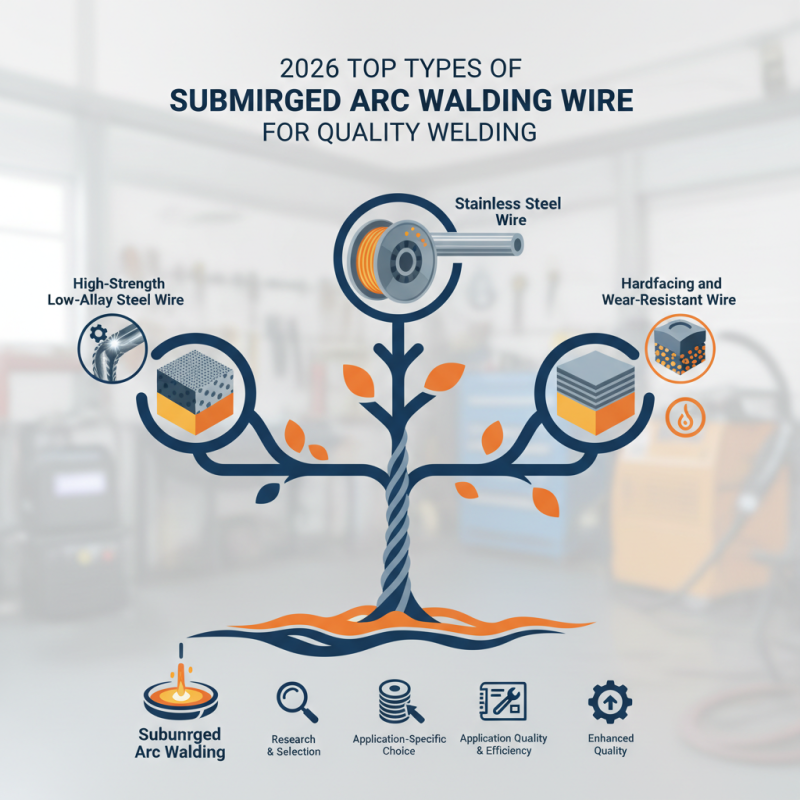
Submerged Arc Welding (SAW) is a popular method for heavy industrial applications. The type of welding wire used is critical for achieving quality welds. In 2026, several specific types of SAW wire stand out due to their unique properties and applications. For instance, low-alloy steel wires are favored for their strength and ductility. They are suitable for structural components in construction and shipbuilding. Reports indicate that these wires can enhance the toughness of welds, particularly in harsh environments.
Another notable type is stainless steel wire, which offers excellent corrosion resistance. This makes it ideal for industries like food processing and petrochemicals. Research shows that using stainless steel wire can significantly reduce maintenance costs due to its durability. Additionally, the consumption of stainless steel SAW wire is expected to grow by 5% annually through 2026, driven by increasing demand in various sectors.
Throughout the industry, there is an ongoing debate about the ideal choice of wire based on application needs. Not all wires perform equally under extreme conditions. Some users have reported challenges in achieving penetration and bead appearance with certain wires. This highlights the importance of selecting the appropriate type based on specific project requirements. Understanding these nuances can lead to improved welding outcomes and greater overall efficiency.
2026 Top Types of Submerged Arc Welding Wire for Quality Welding
Factors Influencing the Selection of SAW Wire for Optimal Results
When selecting submerged arc welding (SAW) wire for optimal results, multiple factors come into play. The chemistry of the wire directly influences the weld's mechanical properties. According to industry reports, the wire's composition should complement the base materials being joined. Improper choices can lead to issues such as poor penetration or weak joints. The welding process parameters, including the current and voltage settings, also affect the choice of wire. For example, a higher current often requires a finer wire to maintain the arc stability.
Additionally, the intended application is crucial. For high-stress environments, a wire that offers enhanced toughness and ductility is necessary. Stability of the wire during feeding can significantly impact the consistency of the weld. Many welding professionals report that wire with a smooth surface and proper diameter reduces feeding issues, leading to better control. Interestingly, some wires designed for specific environments perform poorly when used in different conditions, highlighting the need for careful selection based on application requirements.
The availability of materials and costs can also affect decisions. Economic considerations sometimes lead to compromises in performance. However, investing in high-quality wire can save time and increase productivity in the long run. The balance between cost and quality should be carefully evaluated. All these factors make selecting the right SAW wire a complex yet essential task.
2026 Top Types of Submerged Arc Welding Wire for Quality Welding
| Wire Type |
Diameter (mm) |
Applications |
Composition (%) |
Mechanical Properties |
| E71T-1 |
1.2 |
Structural Steel |
C: 0.07, Mn: 1.40, Si: 0.50 |
Yield Strength: 450 MPa, Tensile Strength: 520 MPa |
| E81T1-Ni1 |
1.6 |
Shipbuilding |
C: 0.05, Ni: 2.5, Mn: 1.00 |
Yield Strength: 490 MPa, Tensile Strength: 550 MPa |
| E90T5-K3 |
1.4 |
Heavy Machinery |
C: 0.08, Mn: 1.60, Mo: 0.35 |
Yield Strength: 520 MPa, Tensile Strength: 590 MPa |
| E50T0-K2 |
1.0 |
Pipeline |
C: 0.06, Mn: 0.80, Si: 0.30 |
Yield Strength: 450 MPa, Tensile Strength: 500 MPa |
Future Trends in Submerged Arc Welding Wire Development
The submerged arc welding (SAW) process has seen significant advancements in recent years. As industries evolve, so does the demand for higher-quality welding wires. Current data predicts that the global submerged arc welding market will reach $6 billion by 2025. This growth is driven by increasing infrastructure projects worldwide. Companies are now focusing on wire formulations that enhance performance and reduce defects.
One future trend in enclosed arc welding wire development is the shift to low-alloy and ultra-high-strength materials. According to a recent industry report, these materials improve weld quality while reducing costs. Additionally, the implementation of advanced alloying technologies will allow for a broader range of applications. This could lead to innovations that enhance weld appearance and structural integrity, addressing some current shortcomings in production processes.
Tips: Ensure you choose wires based on the specific material and thickness of your project. Regularly assess the performance of your welding wire and keep abreast of new formulations. Investing in innovative technologies can lead to better efficiency and consistency in welding quality.