Why Choose Submerged Arc Welding Wire for Your Welding Projects?
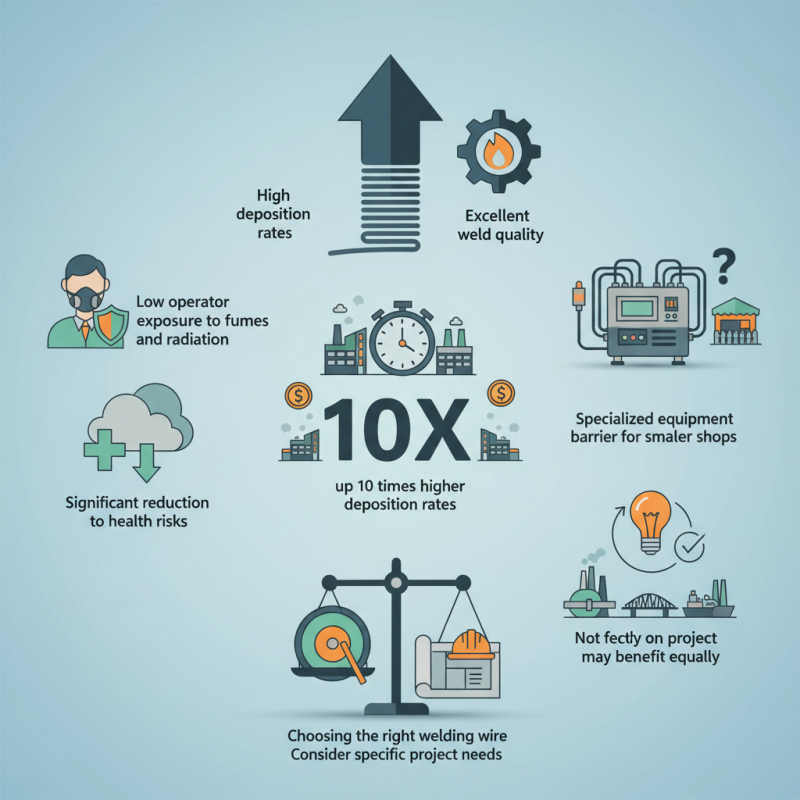
Submerged Arc Welding Wire has become a preferred choice for many welding professionals. This is due to its high deposition rates and excellent weld quality. According to the American Welding Society, submerged arc welding (SAW) processes can achieve deposition rates up to 10 times higher than traditional methods. This efficiency is critical in industries where time is money.
In addition, Submerged Arc Welding Wire offers low operator exposure to fumes and radiation. Reports from the Occupational Safety and Health Administration indicate a significant reduction in health risks when using this technique compared to others. However, some challenges still exist. For instance, the need for specialized equipment can be a barrier for smaller shops.
Choosing the right welding wire is essential. While Submerged Arc Welding Wire provides numerous benefits, professionals must consider their specific project needs. Reflecting on the applicability of this technology is vital, as not every project may benefit equally from its use.
Benefits of Submerged Arc Welding Wire in Industrial Applications
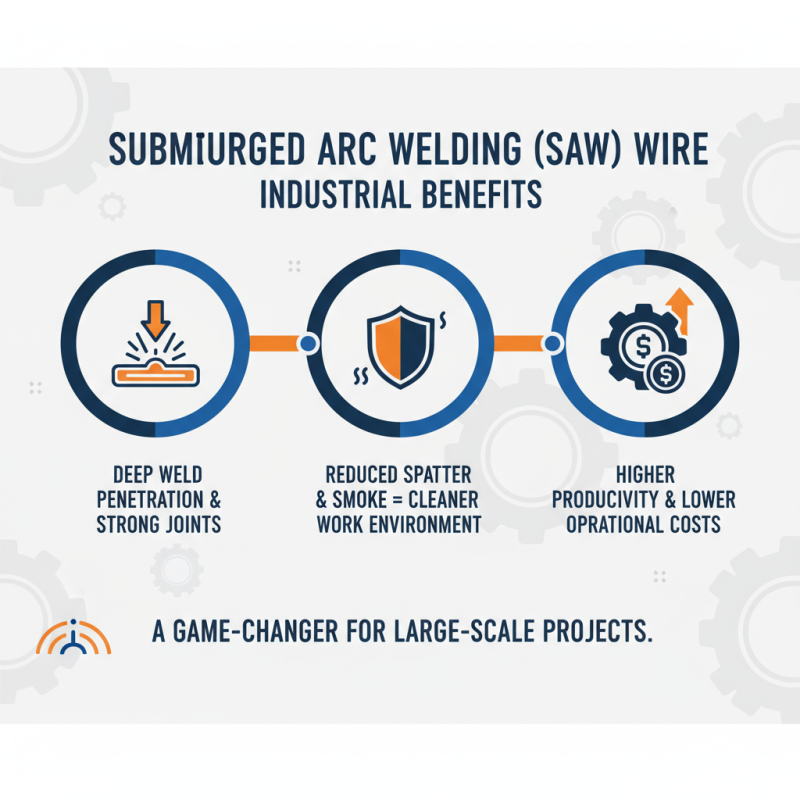
Submerged Arc Welding (SAW) wire is a game-changer in industrial applications. Its ability to produce deep weld penetration and strong joints makes it a preferred choice for large-scale projects. The use of SAW wire significantly reduces spatter and smoke, leading to cleaner work environments. This efficiency translates to higher productivity and lower operational costs.
One of the key benefits of using submerged arc welding wire is its consistency in performance. The automatic nature of SAW allows for uniform weld quality. This is especially important in complex assemblies. However, it’s crucial to ensure proper calibration of the welding machine. A small error can affect the entire welding process.
Tips for using SAW wire effectively include maintaining the correct wire feed speed. Too fast can cause poor fusion, while too slow may lead to excess buildup. Additionally, always check the composition of the wire. Different materials require specific types of SAW wire for the best results. Regular maintenance of the welding equipment is also essential. It ensures operational efficiency and prolongs equipment life.
Comparative Analysis: Submerged Arc Welding Wire vs. Other Welding Wires
When evaluating different welding wires, submerged arc welding (SAW) wire stands out for its unique characteristics. It provides exceptional welding speed and high deposition rates, often exceeding 10 kg/hour. In contrast, gas metal arc welding (GMAW) typically achieves only 4-6 kg/hour. The high efficiency of SAW can significantly reduce production time in large-scale projects.
SAW wire offers better penetration and bead appearance compared to shielded metal arc welding (SMAW). A study from the American Welding Society indicates that structural integrity is enhanced due to the uniform heat distribution in SAW. However, it requires a sophisticated setup, making it less portable than other methods. This limitation poses challenges for on-site applications, potentially impacting project timelines.
Tips: Always evaluate your project requirements before selecting welding materials. Consider setup complexity against project scale. Regular training in SAW techniques is crucial, as poor execution can lead to defects in the weld. Understanding the specific demands of your welding task can save both time and resources, ensuring lasting results.
Key Features of Submerged Arc Welding Wire for Optimal Performance
Submerged Arc Welding (SAW) wire is a preferred choice for many welding projects due to its key features. This type of wire offers exceptional deep penetration and a smooth finish. The granular flux protects the weld pool, preventing contamination. This ensures cleaner welds with minimal defects.
One of the standout characteristics of SAW wire is its high deposition rate. This allows for faster completion of projects, saving time and cost. Another feature is its ability to weld thick materials efficiently. It is ideal for industries like shipbuilding and construction.
Tips: Always check the compatibility of the SAW wire with your specific project requirements. Adjust settings based on the material used. Experiment with different flux types for optimal results. Consider the welding position and environment too. Not every wire works perfectly in every condition. Some inconsistencies may arise, so be prepared to make adjustments as needed.
Common Use Cases for Submerged Arc Welding Wire in Various Industries
Submerged arc welding (SAW) wire finds application across various industries. In heavy manufacturing, it is often used for welding thick materials. This method allows for deep penetration, making it suitable for structural components in buildings and bridges. The high deposition rate is beneficial for large-scale projects, where speed is crucial.
In shipbuilding, SAW is employed to join large steel sections efficiently. It produces strong welds that can withstand harsh marine environments. Additionally, the low fume generation makes it safer for workers. That's a significant advantage in enclosed spaces.
Tips: Always choose the right flux to match the wire type. A mismatched flux can lead to weak welds. Monitor the welding parameters closely for optimal results.
Another application is in the petrochemical industry. SAW wire is preferred for pipelines due to its reliability. These pipelines must handle high pressures and temperatures. Regular inspections are necessary to maintain safety and efficiency.
Tips: Inspect your equipment regularly to avoid unexpected breakdowns. A single failure can lead to extensive downtime. Always keep a contingency plan in place for essential projects.
Factors to Consider When Selecting Submerged Arc Welding Wire for Projects
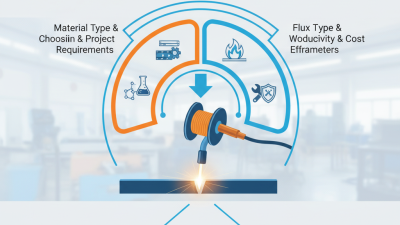
When selecting submerged arc welding wire, it's essential to consider several key factors. The welding wire's diameter plays a vital role in determining the weld's quality and speed. A finer wire provides better precision, while a thicker wire enables faster deposition rates. Assessing the specific requirements of your project can guide you in choosing the right diameter.
Material compatibility is another crucial factor. Different alloys and materials require specific types of welding wire to achieve optimal results. Take time to analyze the base material for your project. This ensures that the welding wire adheres correctly and creates strong joints.
Tips for success include testing various wire types and diameters on scrap materials. This experimentation can reveal the best wire for your project needs. Always be mindful of the environmental conditions too. Wet or humid environments can affect the performance of some types of welding wire. Keeping these points in mind can lead to more successful welding projects in the long run.