inquiry
Leave Your Message

Top Prefabricated Steel Buildings Manufacturers Worldwide

Choosing among the top Prefabricated Steel Buildings manufacturers worldwide requires more than comparing website claims. It requires examining factory capability, engineering experience, material traceability, and completed projects. A dependable manufacturer should explain how steel is cut, welded, coated, inspected, and prepared for transport. Factory photos can help, but documented evidence matters more.

This guide considers manufacturers serving warehouses, workshops, commercial facilities, agricultural buildings, and larger industrial projects. Key indicators include design support, structural calculations, corrosion protection, connection details, production tolerances, and installation guidance. In practical work, a two-millimeter alignment issue can delay roof panels or complicate crane assembly. Small details become expensive quickly.

Regional conditions also deserve attention. Snow loads in Canada differ sharply from wind exposure in coastal Australia or seismic requirements in Japan. Experienced suppliers adapt framing systems, insulation packages, drainage, and foundation interfaces to local project conditions. They should also communicate clearly about certifications, warranty limits, delivery schedules, and responsibilities between the factory and construction team.

No ranking is permanent. Market reputation changes.

Some manufacturers excel at rapid modular production, while others provide stronger architectural customization or engineering support. Public information can remain incomplete, especially for private companies. Therefore, this overview should support careful comparison, not replace technical review or local professional advice. Buyers should request recent references, shop drawings, material certificates, and realistic quotations before signing a contract. Reliable decisions come from evidence, site needs, and honest discussions about what each manufacturer cannot provide.
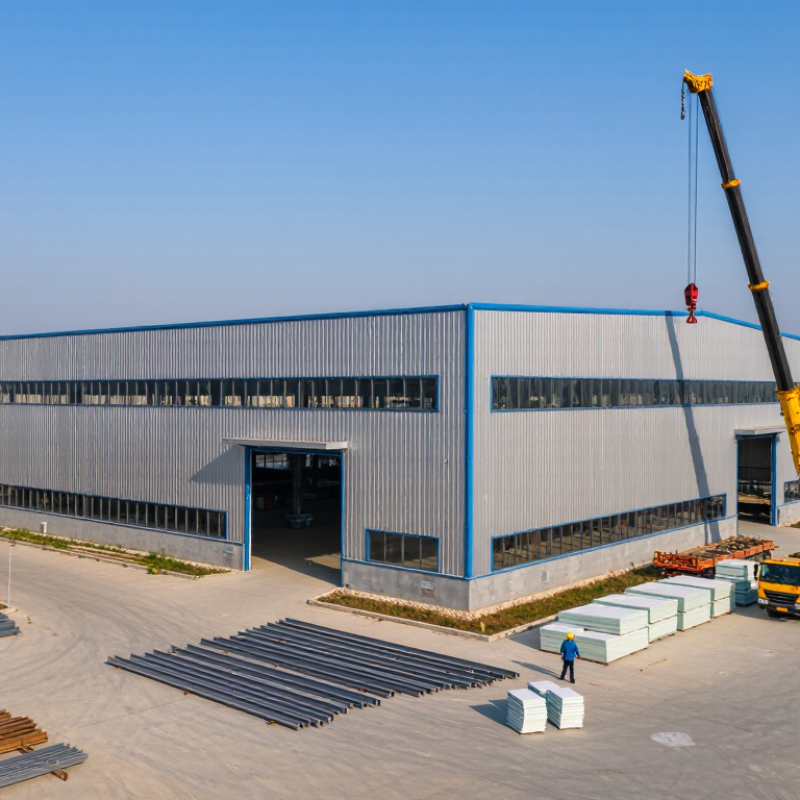
Top Prefabricated Steel Buildings Manufacturers Worldwide

Definition and Scope of Prefabricated Steel Buildings

Top Prefabricated Steel Buildings Manufacturers Worldwide

Prefabricated steel buildings are structures whose primary components are engineered, cut, drilled, and assembled before reaching the construction site. The scope includes warehouses, factories, agricultural buildings, offices, and modular facilities. It usually excludes ordinary steel frames fabricated entirely on site. The boundary is not always clean.

Steel panels, columns, beams, roof systems, insulation, doors, and service openings may arrive as coordinated packages. A typical project begins with digital design, followed by factory production, quality checks, transport, and site installation. This process can reduce weather delays and material waste, but transport distance and foundation work still affect performance. Factory-built does not mean automatically sustainable.

The sector relies on structural calculations, fire protection requirements, corrosion control, and local building codes. UNEP’s 2023 Global Status Report states that buildings and construction consumed 34% of global energy and produced 37% of energy- and process-related carbon emissions in 2022. Steel’s scale is also significant: World Steel Association data reports approximately 1.89 billion tonnes of crude steel production in 2023. These figures explain why designers increasingly examine recycled content, connection efficiency, insulation thickness, and future dismantling.

An honest definition must include limitations. A fast installation can hide poor site coordination. A recyclable frame can still perform badly with inefficient cladding. Project specifications should therefore record tolerances, coatings, thermal values, fire ratings, and maintenance access, rather than relying on the word “prefabricated” alone.
Key Criteria for Comparing Global Manufacturers

When comparing prefabricated steel building manufacturers worldwide, examine engineering ability before reviewing price. A reliable manufacturer should provide structural calculations, material specifications, and drawings for independent review. Check whether its engineers understand local wind, snow, seismic, and fire requirements. Global experience matters, but local code compliance matters more. Ask for evidence of quality systems, welding procedures, coating standards, and documented inspections. Factory photographs help, yet audited records are stronger evidence.

Tips: Request a complete sample package before signing. Compare steel grades, connection details, insulation thickness, and corrosion protection line by line. Confirm what the quotation excludes. Freight, foundations, installation, and customs can change the final cost.

Delivery performance also deserves careful testing. Ask for references from projects with similar spans, climates, and building use. Contact those clients directly, if possible. Review production capacity, communication practices, warranty terms, and after-sales support. A manufacturer should explain how it handles damaged panels or dimensional errors. Vague answers are a warning sign. I have seen attractive low bids become expensive after missing accessories appeared. That lesson is easy to overlook. Still, references can be selective, and factory visits cannot reveal every future problem. Compare at least three technically equivalent proposals, not merely three prices. Use a scoring sheet with measurable categories, such as engineering quality, inspection records, delivery history, and total lifecycle cost. Reliability is built through verifiable details, not confident promises.

Top Prefabricated Steel Buildings Manufacturers Worldwide — Key Criteria for Comparing Global Manufacturers

Structural steel grade is a practical benchmark when comparing prefabricated building manufacturers. The chart shows the minimum yield strength associated with common European structural steel grades for products up to 16 mm thick, where the relevant standard specifies this thickness range.

Higher yield strength can support more efficient structural design, but manufacturer selection should also verify engineering capability, welding quality, corrosion protection, factory certification, delivery capacity, and compliance with project-specific standards.

Leading Prefabricated Steel Building Manufacturers Worldwide

Leading Prefabricated Steel Building Manufacturers Worldwide are judged by more than factory size. Procurement teams examine engineering control, traceability, delivery records, and site performance. Grand View Research valued the global prefabricated construction market at approximately USD 153.7 billion in 2023. Its report projects a 7.8% compound annual growth rate through 2030. Steel systems support repeatable connections, controlled tolerances, and faster assembly beside busy construction sites. Yet precision alone does not guarantee dependable results.

Experienced manufacturers publish connection calculations, coating specifications, welding procedures, and inspection records. These details help buyers compare factories across different countries. The 2023 Global Status Report for Buildings and Construction stated that buildings consumed 32% of global energy in 2022. The sector also produced 34% of global carbon dioxide emissions. Therefore, leading suppliers should provide environmental product declarations, recycled-content data, and clear transport assumptions. One weakness remains: industry comparisons often mix building kits, complete structures, and installation services. Buyers should question attractive rankings.

Tips: Request three recent project references. Audit the factory. Review steel grades and weld inspection methods. Confirm local code support before signing. Compare delivered cost, not only the quoted frame price. Check whether drawings include foundations, drainage, fire protection, and erection tolerances. A small missing detail can delay an entire installation. Cite the report edition and measurement boundary when comparing sustainability claims.

Top Prefabricated Steel Buildings Manufacturers Worldwide - Leading Prefabricated Steel Building Manufacturers Worldwide

Market Region Representative Structural Standard Common Steel Grade Designations Typical Clear Span for Portal-Frame Buildings Frequently Supplied Building Types Indicative Project Schedule
North America AISC 360; ASCE 7 for loading criteria ASTM A36, ASTM A572 Grade 50, ASTM A500 Approximately 15–60 m, subject to loading and column layout Warehouses, distribution centers, agricultural buildings, workshops, aircraft shelters Engineering and detailing: 2–6 weeks; fabrication and erection: 8–20 weeks
Europe EN 1993-1-1 (Eurocode 3); EN 1991 for actions S275, S355, S420, S460 Approximately 12–50 m, depending on snow, wind, and functional requirements Industrial halls, logistics facilities, retail buildings, sports halls, agricultural structures Design and approvals: 3–8 weeks; fabrication and erection: 10–24 weeks
East Asia National steel design codes, including GB 50017 in China Q235B, Q355B, Q355C; equivalent grades may be specified by contract Approximately 15–60 m for common industrial and storage applications Factories, warehouses, prefabricated offices, commercial halls, modular accommodation Design and production planning: 2–6 weeks; fabrication and erection: 8–20 weeks
South Asia IS 800; IS 875 for wind and other design loads E250, E350, E410; project specifications may require equivalent grades Approximately 12–45 m for standard low-rise applications Industrial sheds, warehouses, workshops, cold-storage buildings, agricultural facilities Design and detailing: 2–5 weeks; fabrication and erection: 8–18 weeks
Southeast Asia Local building regulations with reference to international steel standards S275/S355 equivalents, ASTM A36, ASTM A572 Grade 50 Approximately 12–50 m, with corrosion and wind exposure considered Factories, logistics buildings, commercial structures, workshops, agricultural buildings Design and approvals: 3–7 weeks; fabrication and erection: 9–22 weeks
Middle East AISC 360 or Eurocode-based specifications; local authority requirements also apply S275, S355, ASTM A36, ASTM A572 Grade 50 Approximately 15–70 m for warehouses, industrial halls, and large-span facilities Warehouses, workshops, hangars, exhibition halls, oil and gas support buildings Engineering and approvals: 4–10 weeks; fabrication and erection: 10–26 weeks
Africa Local building codes supplemented by Eurocode, British, or American practices S275, S355, ASTM A36, ASTM A572 Grade 50 Approximately 12–50 m, depending on climate, transport, and site conditions Mining facilities, warehouses, agricultural buildings, workshops, schools, community buildings Design and logistics planning: 4–10 weeks; fabrication and erection: 12–28 weeks
Oceania AS 4100; AS/NZS 1170 for structural actions G250, G350, G450; hot-rolled sections may use AS/NZS grade specifications Approximately 12–55 m, subject to wind-region and seismic requirements Rural sheds, industrial buildings, logistics facilities, workshops, sports structures Design and approvals: 3–8 weeks; fabrication and erection: 10–24 weeks
Latin America Local steel and seismic codes, often supplemented by AISC or Eurocode provisions ASTM A36, ASTM A572 Grade 50, equivalent regional structural grades Approximately 12–55 m, with seismic and wind design frequently governing Manufacturing plants, warehouses, agricultural buildings, retail facilities, workshops Design and permitting: 3–9 weeks; fabrication and erection: 10–24 weeks

Note: Span ranges and schedules are indicative industry benchmarks rather than manufacturer-specific guarantees. Final values depend on building use, local regulations, structural loads, coatings, transportation distance, site conditions, and project complexity.

Manufacturing Processes, Technologies, and Quality Standards

Worldwide prefabricated steel building manufacturers depend on controlled production, not only fast assembly. The World Steel Association’s 2024 World Steel in Figures reported 1,892.2 million tonnes of crude steel production in 2023. This scale makes material traceability essential.

A reliable factory begins with BIM-based detailing and verified shop drawings. CNC cutting then creates consistent plates, columns, and connection holes. Robotic welding improves repeatability, while qualified welders handle complex joints. Surface preparation may include shot blasting, coating, or hot-dip galvanizing. Each stage should record heat numbers, dimensions, weld parameters, and inspection results. Small errors matter.

Quality systems should align with ISO 9001, while welding controls can follow ISO 3834. Structural execution may require EN 1090, AISC 360, or locally adopted standards. AWS D1.1 and ASTM specifications also support welding and material verification. The ISO Survey 2022 recorded more than one million ISO 9001 certificates worldwide, showing broad adoption of formal quality systems. Certification alone is not proof of perfect work. A factory audit should examine calibration records, non-destructive testing, coating thickness, and corrective actions. Digital dashboards help, but incomplete data still creates risk. Manufacturers should test trial assemblies before shipment and review failures openly. That discipline builds dependable buildings.

Applications, Advantages, and Selection Considerations

Prefabricated steel buildings serve warehouses, workshops, agricultural storage, retail units, and emergency facilities. Their factory-made frames can reduce site work and shorten construction schedules. Steel also offers strong load capacity with relatively light structural weight. Clear spans create open interiors for forklifts, machinery, or future expansion. In practice, accurate foundations remain essential. A small anchor-bolt error can delay the entire assembly.

Selection should begin with the building’s actual use, not a standard catalogue size. Identify snow loads, wind exposure, seismic conditions, drainage needs, and insulation performance. Ask manufacturers for structural calculations, material specifications, shop drawings, and quality-control records. Experienced suppliers should explain connection details clearly. They should also provide realistic delivery timelines and installation guidance. Cheap quotations may exclude transport, coatings, fire protection, or ventilation.

Compare corrosion protection for the local climate. Coastal air, chemical vapors, and frequent condensation require different coating strategies. Review previous projects with similar spans and operating conditions. Factory automation improves consistency, but it does not remove every risk. Human inspection still matters. Request independent testing where the project demands it. Check warranty terms carefully, especially for roof panels and protective finishes. A manufacturer may appear technically capable, yet weak communication can create expensive site problems. The best choice balances engineering evidence, service response, lifecycle cost, and practical construction experience.