- HOME
- ABOUT US
- PRODUCTS
- TECHNOLOGY R&D
- PROJECTS
- NEWS
- Blog
- CONTACT US
inquiry
Leave Your Message
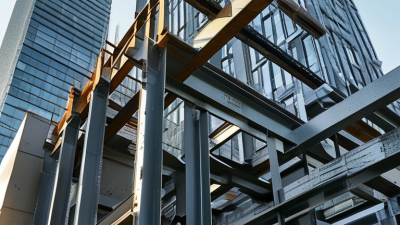
Structural Metal Beams quietly support warehouses, bridges, offices, and homes. Their shapes may look simple, but each profile manages forces differently. An I-beam carries bending loads efficiently, while a box beam offers strong resistance against twisting. Channels, angles, tees, hollow sections, and tapered beams also solve specific structural problems.
This guide examines the top 10 types of Structural Metal Beams used in modern construction. It considers load capacity, span length, connection methods, corrosion exposure, fabrication, and installation demands. The discussion reflects common engineering practice and established design principles used with standards such as AISC and Eurocode. Still, no universal ranking is perfect. A beam that performs well in a factory may be unsuitable near saltwater or under repeated vibration.
Fazlur Rahman Khan, one of the most influential structural engineers of the twentieth century, said, “The technical man must be the one who makes the decisions.” His words remain relevant when selecting steel members. Design software can compare sizes quickly, but it cannot replace engineering judgment, site knowledge, or careful inspection. A beam’s performance depends on more than its catalog name. Steel grade, weld quality, bolt placement, fire protection, and connection stiffness all matter.
Expect practical comparisons rather than a rigid winner’s list. Some sections save weight. Others simplify fabrication. A few appear economical until transportation and installation costs are included. The following overview explores where each beam type works best, where it may fail, and what engineers should verify before specifying it.
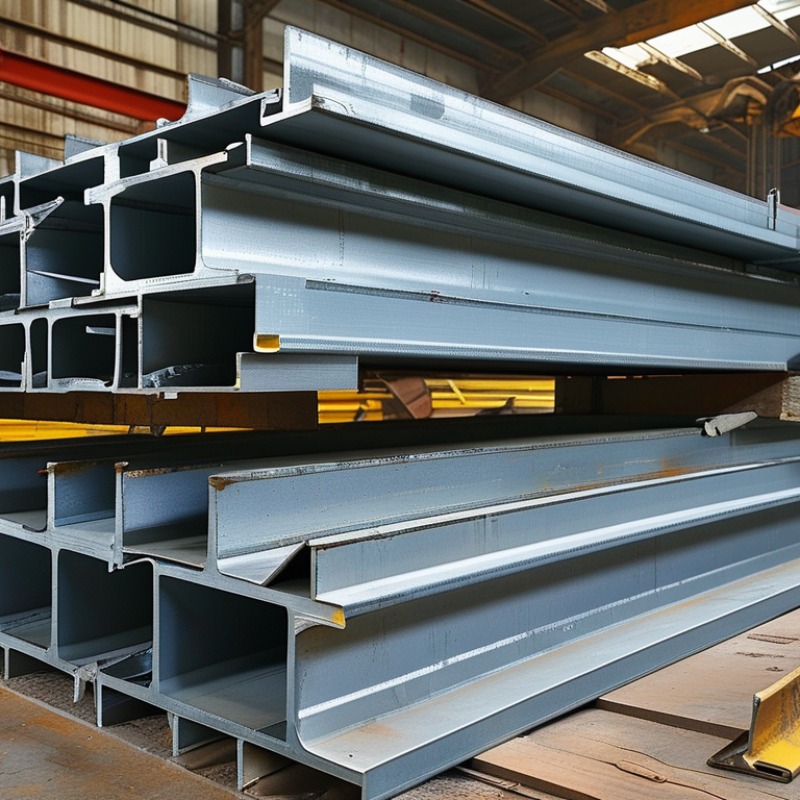
Structural beams are members designed to resist bending, shear, torsion, and axial effects. Under AISC 360, engineers check strength and serviceability through LRFD or ASD methods. EN 1993-1-1, commonly called Eurocode 3, adds cross-section classification, buckling resistance, and stability checks. These rules define a beam by structural behavior, not appearance alone.
The ten common forms include I-beams, H-beams, wide-flange beams, S-beams, channels, Z-sections, T-sections, angle beams, box beams, and plate girders. Each shape moves steel away from the neutral axis differently. A deep I-section usually improves bending efficiency. A box beam can resist torsion better. A plate girder suits long spans, but welding quality and web buckling require close control. The World Steel Association reported 1.89 billion tonnes of crude steel production in 2023, showing the scale of steel use, yet material volume does not guarantee safe design.
Tips: Start with span, loads, restraint, and connection details. Then select a section. Check lateral-torsional buckling under AISC 360. Under EN 1993, verify section class and relevant buckling curves. Real projects often fail at interfaces, not in the beam table. Small assumptions matter. Designers should also confirm fire exposure, fatigue cycles, tolerances, and corrosion conditions. A quick spreadsheet check is useful, but it can hide an incorrect restraint assumption. Independent review remains valuable, especially when American and European criteria are mixed.
| No. | Beam Type | Typical Section Geometry | Indicative Dimensions | Main Structural Advantages | Common Applications | AISC 360 Design Focus | EN 1993 Design Focus |
|---|---|---|---|---|---|---|---|
| 1 | Rolled I- or H-Section | Two flanges connected by a central web; usually hot-rolled with parallel or tapered flange geometry. | Overall depth approximately 100–1,000 mm; flange width approximately 55–450 mm; web thickness approximately 4–30 mm. | High bending efficiency about the major axis and good strength-to-weight ratio. | Building floors, roof framing, platforms, industrial structures, and bridge members. | Flexural strength, shear strength, lateral-torsional buckling, local buckling, compression resistance, and connection limit states under AISC 360. | Cross-section classification, bending resistance, shear resistance, lateral-torsional buckling, and member buckling under EN 1993-1-1. |
| 2 | Welded Plate Girder | Fabricated I-section made from separate flange plates and a web plate, allowing dimensions to be tailored to the design. | Depth approximately 600–3,000 mm; flange width approximately 200–1,000 mm; web thickness approximately 8–40 mm. | Efficient for long spans and heavy loads; flange and web sizes can be optimized independently. | Long-span floors, transfer girders, crane runway beams, and bridge main girders. | Web shear buckling, stiffener design, flange local buckling, weld design, lateral-torsional buckling, and compact/noncompact element classification. | Plate slenderness, shear buckling, transverse stiffeners, welds, fatigue where relevant, and execution-related detailing under EN 1993. |
| 3 | Box Girder | Closed rectangular or trapezoidal section formed from plates, with one or more internal webs or diaphragms. | Width approximately 300–2,500 mm; depth approximately 300–2,500 mm; plate thickness approximately 8–50 mm. | Excellent torsional stiffness and efficient resistance to bending in two principal directions. | Bridge decks, transfer structures, crane beams, architectural roofs, and heavily loaded frames. | Flexure, shear, torsion, distortion, plate slenderness, local buckling, welds, diaphragms, and stability under AISC 360. | Bending, shear, torsion, plate buckling, distortion, stiffeners, fatigue, and connection detailing using the applicable EN 1993 parts. |
| 4 | Channel Section | Open U- or C-shaped section consisting of a web and two flanges projecting from the same side. | Depth approximately 75–400 mm; flange width approximately 40–100 mm; thickness approximately 4–20 mm. | Lightweight and convenient for secondary framing, edge members, and built-up sections. | Secondary beams, joists, stair stringers, lintels, edge beams, and equipment supports. | Unsymmetrical bending, shear, torsion, distortional and local buckling, beam-columns, and connection eccentricity. | Section classification, flexural buckling, lateral-torsional buckling, warping torsion, shear, and combined actions. |
| 5 | T-Section | A flange and web arranged in a T shape; may be rolled, cut from an I-section, or fabricated from plates. | Depth approximately 50–300 mm; flange width approximately 50–300 mm; thickness approximately 5–25 mm. | Useful where one-sided flange action, reduced depth, or connection clearance is required. | Stiffeners, bracing members, edge beams, truss components, and built-up structural details. | Flexural resistance, shear, torsion, local buckling, compression buckling, and eccentric loading. | Classified compression elements, flexural and shear resistance, member buckling, and combined axial force and bending. |
| 6 | Equal-Leg Angle Beam | L-shaped open section with two legs of equal width; commonly used singly or in pairs. | Leg width approximately 25–200 mm; thickness approximately 3–25 mm; leg width-to-thickness ratio commonly varies from about 5 to 20. | Simple, economical, and effective for axial force, short-span bending, and connection detailing. | Trusses, bracing, shelf angles, framing supports, towers, and light secondary beams. | Angle eccentricity, flexural and axial resistance, block shear, local buckling, connection design, and member slenderness. | Buckling about principal axes, torsion, eccentric connections, section classification, and combined bending and axial force. |
| 7 | Z-Section | Thin-walled cold-formed section with flanges extending in opposite directions, producing a Z-shaped profile. | Depth approximately 100–350 mm; flange width approximately 40–100 mm; thickness approximately 1.0–4.0 mm. | Low self-weight, efficient nesting during transport, and practical lap connections for continuous purlins. | Roof purlins, wall girts, cladding support, and lightweight industrial framing. | Design of cold-formed members, local and distortional buckling, screw or bolt connections, and system restraint. | Effective-width or direct-strength procedures, local/distortional buckling, lateral restraint, lap joints, and EN 1993-1-3 provisions. |
| 8 | Rectangular Hollow Section | Closed rectangular or square hollow profile manufactured from welded or formed steel plate. | Width and depth approximately 40–600 mm; wall thickness approximately 2–25 mm. | Good torsional stiffness, clean appearance, balanced behavior about two axes, and reduced exposed surface. | Columns, beams, trusses, space frames, handrail supports, and exposed architectural structures. | Compactness, local buckling, flexure about both axes, torsion, beam-column interaction, and HSS connection limit states. | Section classification, local plate buckling, flexural and torsional resistance, member stability, and hollow-section connections. |
| 9 | Circular Hollow Section | Closed circular steel tube with uniform wall thickness; available as hot-finished or cold-formed construction tubing. | Outside diameter approximately 26–610 mm; wall thickness approximately 2–25 mm. | Excellent torsional efficiency, nearly equal resistance about all bending axes, and favorable aerodynamic behavior. | Tubular trusses, space frames, tubular beams, canopies, masts, and exposed structures. | Local slenderness, flexure, compression, torsion, beam-column interaction, and HSS joint design. | Class 1–4 classification, buckling resistance, torsion, fatigue where applicable, and circular hollow-section joints. |
| 10 | Castellated or Cellular Beam | A fabricated open-web beam produced by cutting and rejoining an I-section to create hexagonal or circular web openings. | Overall depth approximately 300–1,200 mm; opening diameter or depth approximately 150–700 mm; opening spacing commonly 1.2–1.8 times the opening size. | Provides increased structural depth and allows mechanical services to pass through the web openings. | Long-span floors, commercial buildings, roofs, and structures requiring integrated services. | Vierendeel bending around openings, web-post buckling, shear, lateral-torsional buckling, deflection, and weld design. | Web-post stability, shear and bending interaction, local buckling, fatigue where relevant, serviceability, and fabricated-joint verification. |