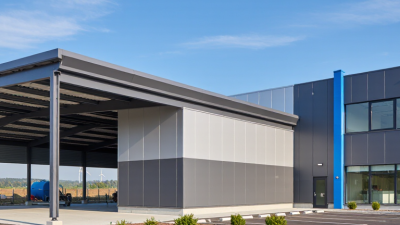
Steel Structure Buildings are chosen for more than their frame weight or quoted price. Buyers must compare engineering capability, fabrication quality, delivery reliability, and support after installation. The stakes are substantial: the World Steel Association’s World Steel in Figures 2025 reports that global crude steel production reached about 1.88 billion tonnes in 2024. Its sector information also identifies construction as the largest steel-using market, accounting for roughly half of global steel demand. These figures show the scale of the supply chain, but they do not prove that any individual supplier is dependable.
A useful shortlist looks beyond glossy project photos. Check whether a supplier can provide stamped design documents where required, traceable material records, clear coating specifications, and realistic production schedules. Ask how it handles tolerances, welding inspections, packaging, and replacement parts. Small details matter. A missed connection plate or unclear drawing revision can delay work on site, even when the main frame arrives on time.
This guide compares ten steel structure building suppliers through practical buyer criteria, including product range, customization, quality controls, and export experience. Company claims should still be verified against project references and current documentation. A polished website is not evidence. Supplier rankings can help narrow the field, but they cannot replace technical review, site-specific engineering, or direct discussions about your project’s requirements.
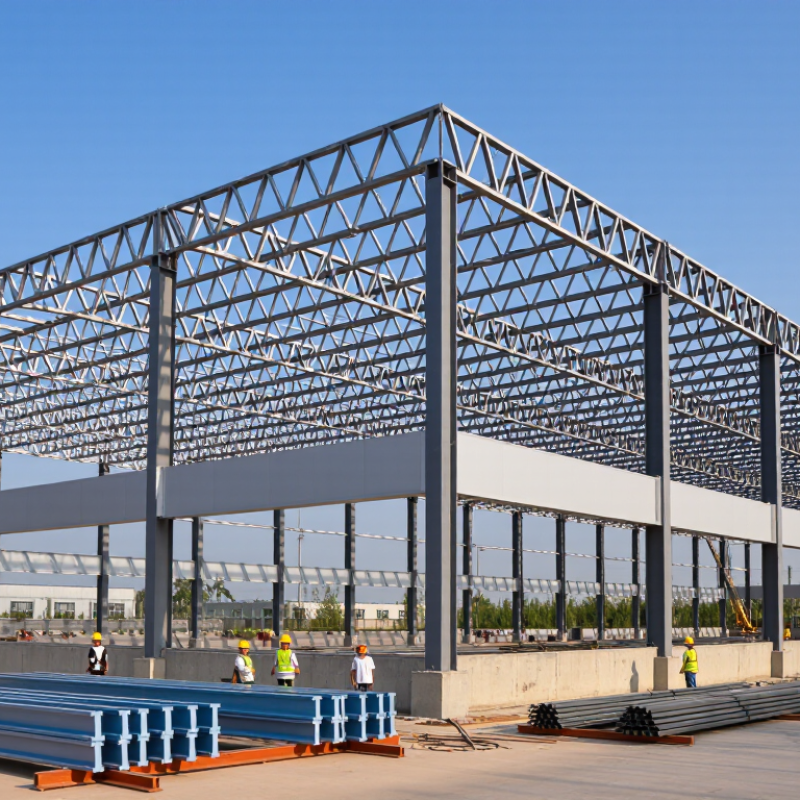
A steel structure supplier may cover three connected stages: design support, fabrication, and erection. Design teams coordinate member sizes, connection details, loads, and shop drawings with the project engineer. Buyers should confirm exactly who checks calculations and approves revisions. A small mismatch between a column base plate and anchor bolts can delay installation. Details matter.
Fabrication turns approved drawings into cut, drilled, welded, and coated components. Ask how the supplier tracks steel grades, dimensions, weld inspections, and changes between drawing versions. The World Steel Association’s World Steel in Figures 2024 reports 1,892.2 million tonnes of crude steel production in 2023. That scale makes material selection and efficient detailing worth discussing, though it does not guarantee a project’s quality or environmental performance. The GlobalABC 2023 Global Status Report says buildings and construction accounted for 37% of global energy- and process-related CO₂ emissions in 2022. Better coordination can reduce avoidable material use, but only when design choices fit actual loads and site conditions.
Erection may be handled by the supplier’s crew or a separate contractor. Clarify who provides lifting plans, temporary bracing, sequencing, and field measurements. A tidy drawing is not the whole story. Wind, access, and crane position can change the sequence on site. Ask for recent project examples and documented inspection procedures, then compare the proposed scope line by line. Some suppliers provide the full chain; others stop at fabricated steel. That difference is easy to miss.
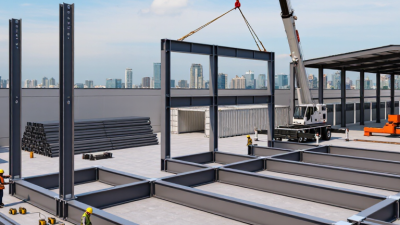
Buyers can source steel buildings for warehouses, workshops, farm sheds, retail units, and offices. Each use creates different demands: a warehouse may need wide, column-free space, while an office needs floor-by-floor support and room for services. worldsteel’s 2023 steel-use breakdown assigns about 52% of global steel use to buildings and infrastructure. That figure is context, not a design rule.
For broad clear spans, compare rigid portal frames with trussed systems. Portal frames often suit single-storey warehouses and workshops; trusses can span larger distances but add depth and connection details. Multi-storey projects commonly use braced or moment-resisting frames. Cold-formed steel purlins and girts may support roof and wall cladding, but their spacing must match wind and snow loads. Fit matters.
Ask suppliers for drawings, load assumptions, connection details, and evidence that the proposed system suits the site. Also compare what is included: some quotations exclude foundations, insulation, fire protection, or erection. A low headline price can hide these gaps. Even a sound frame can disappoint if doors, cranes, drainage, or future extensions were not considered early. Check the local design criteria with a qualified structural engineer; supplier standard spans are not automatically suitable for every site.
| Supplier Capability Profile | Typical Building Types | Common Structural Systems | Typical Supply Scope | Buyer Checks |
|---|---|---|---|---|
| 1. Pre-engineered metal building supplier | Warehouses, workshops, garages, distribution buildings, and low-rise commercial facilities | Rigid steel frames with tapered members; portal frames; roof and wall secondary framing | Engineered building packages may include primary frames, purlins, girts, metal panels, and connection details | Confirm design loads, clear-span requirements, building-code basis, insulation options, and what is excluded from the package |
| 2. Structural steel fabricator | Commercial buildings, factories, schools, offices, and additions to existing buildings | Beam-and-column frames; braced frames; moment frames; steel trusses | Shop fabrication of structural members, connection components, surface preparation, and delivery to the project site | Review fabrication drawings, material traceability, welding qualifications, inspection requirements, and erection coordination |
| 3. Steel design-build provider | Industrial plants, logistics buildings, commercial facilities, and multi-use projects | Portal frames, braced frames, moment-resisting frames, and hybrid steel systems | May coordinate engineering, detailing, fabrication, supply, and erection under one project contract | Define design responsibility, permitting scope, interface boundaries, schedule assumptions, and change-order procedures |
| 4. Long-span roof specialist | Sports halls, exhibition buildings, aircraft hangars, arenas, and large assembly spaces | Steel roof trusses, space frames, long-span girders, and portal frames | Roof framing packages, connection design, lifting or transport planning, and, where contracted, erection services | Check clear-span dimensions, deflection limits, roof loads, transport constraints, erection sequence, and support reactions |
| 5. Industrial building steel supplier | Manufacturing plants, power facilities, process buildings, and maintenance workshops | Braced steel frames, moment frames, equipment-support steel, platforms, and pipe racks | Building frames and associated structural steel, sometimes coordinated with equipment and process-system interfaces | Provide equipment loads and operating conditions; verify corrosion protection, access needs, vibration criteria, and interface responsibilities |
| 6. Warehouse and logistics building supplier | Distribution centers, fulfillment buildings, storage facilities, and loading or transfer buildings | Portal frames, braced frames, long-span roof trusses, and steel-supported mezzanines | Building frames and roof or wall framing; some packages can include canopies and structural support for mezzanines | Confirm column-free zones, dock layouts, rack clearances, future expansion provisions, fire-protection coordination, and floor-system interfaces |
| 7. Modular steel building supplier | Site offices, classrooms, worker accommodation, clinics, and temporary or relocatable facilities | Steel module frames, cold-formed steel framing, and stacked modular systems designed for transport and assembly | Factory-built modules or structural chassis, with supply scope varying for finishes, services, transport, and site installation | Check transport dimensions, lifting points, stacking limits, local code compliance, foundations, utility connections, and installation scope |
| 8. Cold-formed steel framing supplier | Low-rise residential buildings, hotels, schools, offices, and interior partitions | Light-gauge steel stud walls, joists, trusses, and load-bearing cold-formed steel framing | Framing members and components; some suppliers also provide layout engineering, prefabricated panels, or installation support | Verify member thickness and coating, load-bearing design, bracing details, acoustic and fire assemblies, and local engineering requirements |
| 9. Agricultural steel building supplier | Equipment storage buildings, barns, workshops, livestock facilities, and crop-storage buildings | Portal frames, rigid frames, steel trusses, and secondary framing with metal cladding | Structural frame packages and roof or wall cladding options, depending on the supplier and project specification | Specify local wind and snow conditions, ventilation, condensation control, door openings, corrosion exposure, and intended building use |
| 10. Multi-storey steel frame supplier | Office buildings, hotels, residential towers, hospitals, and mixed-use developments | Beam-and-column frames, braced frames, moment frames, composite floors, and steel-core systems | Fabricated frame components and connection packages; engineering and erection may be separately contracted | Coordinate with the structural engineer on lateral-force design, floor vibration, fire protection, construction sequencing, and connection design |
Supplier capabilities and package boundaries vary by project. Buyers should confirm local code compliance, engineering responsibility, material specifications, inspection requirements, delivery terms, and erection scope before comparing quotations.
ASTM A992’s 50 ksi (345 MPa) minimum yield strength gives designers a useful baseline for wide-flange shapes. AISC’s 2022 Specification for Structural Steel Buildings, Table A3.1, lists A992 with a 50 ksi yield strength and 65 ksi minimum tensile strength.
These are different properties: yield strength marks the onset of permanent deformation, while tensile strength describes resistance before fracture.
The distinction matters when buyers compare material schedules.
Higher yield strength can help reduce member weight or support a tighter design, but it does not automatically make every beam smaller. Deflection, buckling, connection design, and local loading still govern.
Not every component. A992 applies to specified structural shapes, not every plate, bolt, or accessory in a building.
ASTM A992/A992M also sets chemical and mechanical requirements, so ask suppliers for mill test reports tied to heat numbers. Check that the documented grade matches the purchase order and the member markings.
A neat certificate is reassuring, but I would still verify traceability and dimensions; paperwork alone cannot reveal a damaged flange or a fabrication mismatch. For buyers screening steel structure building suppliers, compare documentation, inspection practices, and delivery consistency—not yield strength in isolation.
When comparing steel structure building suppliers, check whether each certification covers the work your project needs. A quality certificate may not confirm welding qualifications, coating controls, or inspection procedures. Request current documents and confirm their scope and expiry dates. Paper is not proof. Ask for inspection records from a comparable completed project, with sensitive client details removed.
Capacity should be supported by more than a monthly tonnage figure. Request the planned production schedule, available fabrication lines, and current workload. If a supplier promises a large output, ask how many projects will share the same workshops. Visit the facility when practical. A crowded yard may reveal constraints that a sales sheet misses. Still, one site visit cannot predict every delay.
Compare scope line by line: design coordination, connection details, fabrication, surface treatment, packing, and delivery. Exclusions can create gaps between the quoted price and the work required. For lead time, ask for separate durations for drawing approval, material procurement, fabrication, and transport. The clock often starts after design freeze, not contract signing. Request milestone dates and a realistic buffer. I would treat an unusually short schedule cautiously; it may omit approvals or assume decisions happen instantly.
Compare 10 supplier profiles by certification, capacity, project scope, and lead time.
How to read: Scores run from 1 (lower) to 5 (higher). Lead-time score is reversed: 5 means the shortest estimated lead time. Certification refers to the breadth of documented quality, welding, and product-compliance credentials; capacity is relative to buyer demand; scope reflects design, fabrication, and installation coverage. This illustrative dataset demonstrates a comparison method and is not verified data about specific suppliers. Confirm certificates, production capacity, scope, and delivery dates directly with each bidder.
When comparing steel structure building suppliers, ask how each project will meet AISC 360-22—not just whether the supplier “follows the code.” Request a compliance matrix tied to the contract drawings, design calculations, material grades, and connection details. Confirm which edition applies and whether local project requirements add stricter provisions. Paperwork matters.
Check material traceability from mill certificates to marked pieces in the shop. Review approved shop drawings and ask who is responsible for connection design and document revisions. A mismatch between a drawing and a fabricated plate can cause costly field corrections. It happens.
For welding, request the applicable welding procedure specifications, supporting qualification records, and current welder qualifications. Confirm the project’s governing welding standard, such as AWS D1.1 when specified, rather than assuming one standard fits every job. Ask for inspection plans, records of visual checks, and any required nondestructive testing reports. Verify who performed inspections and how rejected welds were repaired and rechecked. A certificate alone is not proof that every project weld meets its requirements. Compare sample records against a real piece mark and weld location. If responses are vague, pause. I would also ask for one recent, redacted quality dossier; some suppliers may not have tidy records, and that deserves a closer look.