China’s steel construction sector has become a major source of industrial, commercial, and residential building solutions. This guide examines China’s Top 10 Steel Structure Building Manufacturers through practical criteria, not advertising claims.
The review considers factory capacity, engineering experience, material traceability, welding control, corrosion protection, and project delivery. It also checks whether manufacturers can provide structural drawings, load calculations, inspection records, and clear installation guidance. These details matter on a busy construction site, where a small dimension error can delay crane work or force costly re-fabrication.
Steel Structure Buildings must perform beyond attractive renderings. They need dependable connections, suitable fire protection, accurate fabrication, and designs suited to wind, snow, seismic, and local code requirements. Manufacturers with experience in warehouses may not automatically understand stadiums, high-rise frames, or modular offices. That difference deserves attention.
J. E. Gordon, a respected materials scientist and author, wrote, “Structural engineering is the art of moulding materials we do not wholly understand into shapes we cannot precisely analyse.” His observation remains valuable. Steel appears predictable, but performance depends on detailing, workmanship, maintenance, and real site conditions.
No ranking is completely permanent.
Prices change. Capacities expand. Certifications may expire. A responsible buyer should verify current documents, visit completed projects when possible, and request references from comparable clients. This introduction therefore treats the selected manufacturers as a useful starting point, rather than an unquestionable verdict. Their strengths, limitations, and suitability for different Steel Structure Buildings projects require careful comparison before any contract is signed.
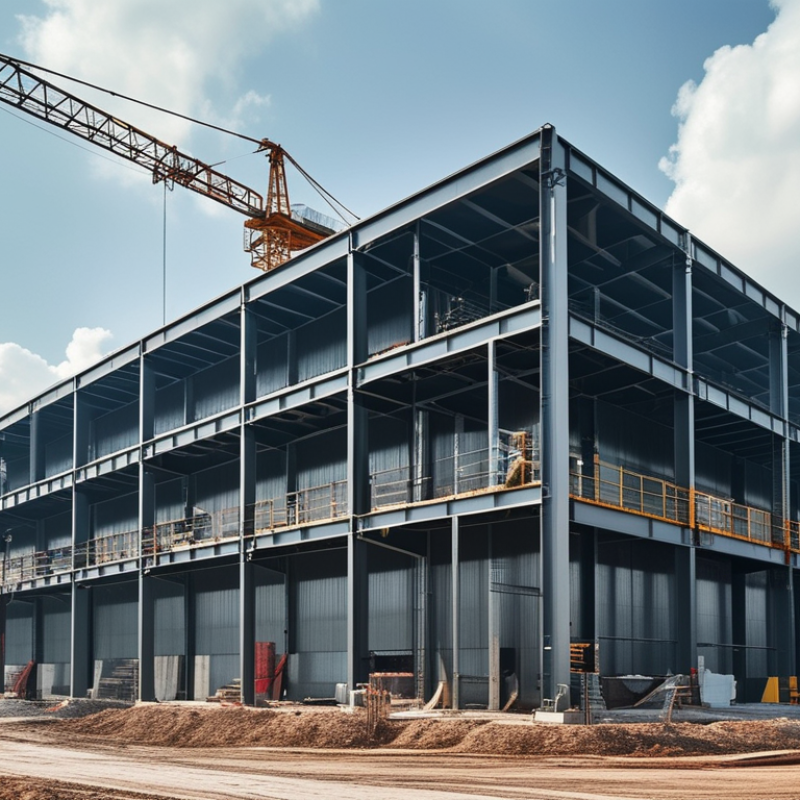
China’s steel-structure building manufacturers operate within an enormous industrial base. In 2024, China produced about 1.005 billion tonnes of crude steel. This figure provides important context for evaluating manufacturing capacity. It also exposes a common misunderstanding. Crude steel is not finished structural steel. It must become plates, beams, tubes, connections, and protected assemblies. A serious manufacturer controls this conversion carefully. Factory evidence matters more than a polished ranking. Buyers should inspect welding procedures, material certificates, dimensional checks, and coating records. Clear documentation supports dependable project decisions.
The strongest producers usually connect engineering, fabrication, logistics, and site installation. Their workshops may contain CNC cutting lines, automated welding stations, shot-blasting equipment, and overhead cranes. These details affect accuracy on a busy construction site. Galvanized surfaces and fire-resistant coatings also require verified specifications. However, production scale can create pressure. Fast output may hide rushed inspections or inconsistent subcontracting. Independent testing and traceable batch numbers become valuable here. A supplier should explain tolerance limits, correction processes, and responses to defects. Not every high-volume factory delivers the same practical quality. Steel prices, energy use, transport distance, and design changes can alter final costs. The industry’s scale is impressive, but careful verification remains necessary.
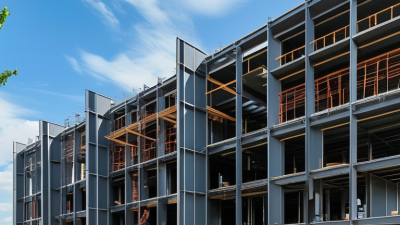
China’s top 10 steel structure manufacturers should be ranked through measurable evidence, not publicity. The World Steel Association reported global crude steel production of about 1.89 billion tonnes in 2023. That scale creates a demanding supply environment. Capacity should therefore include annual fabrication tonnage, workshop space, automated cutting lines, welding stations, and lifting capability. Claimed capacity needs production records or audited documents.
Certifications form the second filter. ISO 9001 supports quality control, while ISO 14001 and ISO 45001 indicate environmental and occupational safety systems. ISO’s 2023 Survey recorded more than 1.2 million ISO 9001 certificates worldwide, so certification alone cannot prove manufacturing strength. Stronger candidates also show EN 1090, AWS D1.1, or equivalent project-specific approvals. The evidence matters.
Projects should carry the greatest practical weight. A ranking can assess completed tonnage, building area, structural span, delivery accuracy, and performance in industrial, commercial, and public projects. Independent completion records are more useful than attractive case-study photographs. A manufacturer delivering a 50,000-ton logistics facility may demonstrate greater capability than one listing many small buildings. Still, no ranking is perfect. Public data can be incomplete, and reported capacity may exceed real annual output. A transparent scoring model should disclose these weaknesses, update project records, and separate verified experience from marketing claims.
China Top 10 Steel Structure Building Manufacturers
Profiles of China’s Top 10 Steel Structure Building Manufacturers
China’s leading steel structure manufacturers serve factories, warehouses, stadiums, and commercial buildings. Their profiles differ by project scale, engineering depth, and production control. One focuses on fast-built industrial plants. Another develops long-span roofs for sports venues. Several specialize in modular workshops, cold-storage facilities, or high-rise steel frames.
A reliable manufacturer should show traceable project records and qualified engineering teams. Factory audits can reveal welding quality, plate storage, and coating conditions. Look for automated cutting lines, ultrasonic inspection, and documented bolt testing. Design software supports accuracy, but experienced supervisors still matter. Small errors can become costly during site assembly.
The strongest profiles include export experience and clear communication practices. Some manufacturers handle architectural design, structural calculations, fabrication, delivery, and installation. Others provide only fabrication, which may reduce coordination. Certifications help, but certificates alone prove little. Buyers should examine recent projects, material reports, inspection records, and warranty terms. Public information is sometimes incomplete. That deserves careful questioning. Site conditions also challenge standard solutions, especially in coastal regions with humidity, salt exposure, and strong wind loads. A manufacturer may look impressive online, yet practical performance depends on engineering discipline, honest documentation, and responsive after-sales support.
| Rank | Anonymous Profile | Primary Manufacturing Focus | Main Steel Systems | Typical Building Applications | Relevant Design and Production Standards | Common Project Scale | Service Coverage | Typical Export Markets | Key Evaluation Indicators |
|---|---|---|---|---|---|---|---|---|---|
| 1 | Profile 01 | Integrated steel building systems and large-scale structural fabrication | Portal frames Heavy steel frames Space trusses | Industrial plants, logistics facilities, warehouses, transport terminals and large public buildings | Chinese steel design codes, ISO-based quality systems, welding procedure qualification and project-specific international codes | From medium warehouses to multi-span industrial and infrastructure projects | Engineering design, detailing, fabrication, surface treatment, delivery and site installation support | Southeast Asia, the Middle East, Africa and selected European markets | Fabrication capacity, engineering depth, welding control, dimensional accuracy and project references |
| 2 | Profile 02 | Prefabricated industrial buildings and customized steel workshops | PEB systems Crane-support frames Mezzanines | Manufacturing workshops, equipment plants, distribution centers, agricultural buildings and storage facilities | GB structural steel standards, ISO 9001 quality management practices and project-specific fire and wind requirements | Single-span, multi-span and crane-equipped buildings with customized bay layouts | Preliminary design, structural calculations, shop drawings, panel coordination and installation guidance | South Asia, Southeast Asia, Oceania, Africa and Latin America | Load calculation capability, corrosion protection, panel performance and delivery reliability |
| 3 | Profile 03 | High-rise and multi-story steel construction components | H-section columns Composite floors Braced frames | Office buildings, commercial complexes, residential towers, hotels and institutional facilities | Chinese seismic and structural codes, welding qualifications, bolted-connection specifications and approved project standards | Multi-story buildings requiring coordinated steel, concrete and façade interfaces | Connection design, BIM coordination, fabrication, trial assembly and erection sequencing support | East Asia, the Middle East, Southeast Asia and international contractor-led projects | Connection engineering, tolerance control, BIM capability, seismic detailing and erection planning |
| 4 | Profile 04 | Space-frame, truss and long-span structural systems | Space frames Pipe trusses Cable-supported roofs | Sports arenas, exhibition halls, airports, railway stations and large civic structures | Steel structure design codes, structural analysis requirements, welding inspection procedures and fire-engineering specifications | Large column-free roofs and complex curved or irregular architectural forms | Concept engineering, 3D modeling, node design, fabrication, temporary works and erection support | Middle East, Southeast Asia, Central Asia, Africa and selected overseas infrastructure markets | Long-span analysis, node fabrication, erection safety, geometric accuracy and corrosion protection |
| 5 | Profile 05 | Modular and prefabricated steel buildings | Modular units Light-gauge framing Panelized systems | Worker accommodation, classrooms, site offices, clinics, temporary facilities and low-rise commercial buildings | Applicable Chinese building codes, modular construction requirements, fire-safety provisions and ISO-aligned production procedures | Repeatable low-rise modules, relocatable buildings and rapidly assembled facilities | Layout planning, module production, interior coordination, packing, delivery and on-site assembly guidance | Africa, Southeast Asia, the Middle East, island markets and remote project locations | Production repeatability, transport efficiency, assembly time, thermal performance and material traceability |
| 6 | Profile 06 | Steel bridges and infrastructure-related fabrication | Box girders Plate girders Pedestrian bridges | Road bridges, pedestrian bridges, industrial access structures, platforms and municipal infrastructure | Bridge-specific Chinese standards, welding inspection requirements, fatigue-detail provisions and project authority specifications | Small and medium bridge components through major fabricated girder assemblies | Fabrication engineering, weld inspection, coating systems, trial assembly and site transportation planning | Asia, Africa, the Middle East and overseas infrastructure projects managed by general contractors | Fatigue detailing, weld quality, coating durability, trial assembly accuracy and heavy-load logistics |
| 7 | Profile 07 | Cold-formed steel and light steel building components | C- and Z-sections Light steel frames Roof systems | Small warehouses, agricultural buildings, residential extensions, workshops and lightweight commercial structures | Cold-formed steel design provisions, Chinese building codes, coating specifications and project-specific wind-load requirements | Low-rise structures with lightweight envelopes and repetitive framing layouts | Section design, roll forming, component labeling, package delivery and assembly documentation | Southeast Asia, Australia, Africa, Latin America and domestic regional markets | Section consistency, galvanized coating quality, screw connections, thermal detailing and installation simplicity |
| 8 | Profile 08 | Steel infrastructure for energy and process industries | Equipment platforms Pipe racks Industrial towers | Power facilities, petrochemical plants, water-treatment facilities, utility structures and process plants | Chinese industrial steel codes, project welding specifications, NDT requirements, fire protection and client inspection plans | Component fabrication for complex industrial sites with high coordination requirements | Shop detailing, material procurement, NDT coordination, coating, packing and site interface support | Middle East, Central Asia, Southeast Asia, Africa and energy-project markets | Material traceability, NDT coverage, coating systems, dimensional control and schedule performance |
| 9 | Profile 09 | Commercial steel buildings and architectural metal structures | Architectural steel Canopies Glass-support frames | Shopping centers, retail outlets, hotels, entrance canopies, atriums and mixed-use developments | Chinese structural and fire codes, façade interface requirements, welding standards and approved architectural specifications | Retail and commercial projects involving customized visible steelwork | Design coordination, prototype review, fabrication, finish selection and installation support | Asia, the Middle East, Africa and selected international commercial developments | Visual finish, interface coordination, fabrication tolerance, corrosion resistance and architectural compliance |
| 10 | Profile 10 | Steel building components for agriculture, logistics and storage | Warehouse frames Agricultural sheds Storage systems | Cold-storage buildings, farm structures, distribution warehouses, workshops and agricultural processing facilities | Chinese steel construction codes, local wind and snow-load requirements, coating specifications and quality inspection procedures | Economical single-story and multi-span buildings with flexible internal layouts | Standardized design, fabrication, cladding coordination, logistics planning and technical installation support | Southeast Asia, Africa, South America, Central Asia and domestic markets | Cost control, construction speed, envelope performance, maintenance requirements and supply-chain coordination |
A credible top-ten comparison should measure output, not only factory size. China’s National Bureau of Statistics reported approximately 1,005.1 million tonnes of crude steel production in 2024. However, raw steel volume does not prove structural fabrication capacity. Review annual tonnage, monthly capacity, crane load limits, welding lines, and subcontracting dependence. Capacity can mislead.
Fabrication accuracy deserves equal weight. Check cutting tolerances, hole positioning, weld distortion, and trial assembly records. ISO 13920 and EN 1090-2 provide useful tolerance frameworks for dimensional control and execution quality. Strong manufacturers should provide inspection plans, calibrated equipment records, material traceability, and nonconformance data. A clean certificate is helpful, but repeated site corrections reveal more. This part is often underreported.
Delivery performance should be judged through evidence. Compare promised and actual lead times, on-time-in-full rates, packing quality, and rework-related delays. The World Bank’s 2023 Logistics Performance Index placed China 19th globally, showing that national logistics strength still cannot eliminate project-level risks. Ask for shipment schedules, port-loading records, and recent project references. A supplier may have impressive production capacity yet miss delivery because design changes, approvals, or overloaded fabrication bays were ignored. My assessment remains imperfect without audited factory data. That limitation should be stated openly.
China’s top ten steel structure building manufacturers should be assessed beyond factory size or export volume. Field experience shows that reliable suppliers document steel grades, welding procedures, coating thickness, and inspection results. Look for traceable mill certificates and independent testing. ISO-based quality systems help, but certificates alone prove little. Site audits still matter.
Standards must match the destination market. Strong manufacturers can design against Chinese, European, or American codes without careless substitutions. They calculate wind, seismic, fire, and snow loads for each project. Digital models should connect drawings with cutting lists and erection plans. Small errors become expensive at ports or construction sites. That happens.
Sustainability requires measurable evidence. Review recycled steel content, energy use, blasting dust controls, paint emissions, and waste recovery. Efficient spans can reduce material consumption, while bolted connections may simplify future disassembly. However, environmental claims often remain incomplete. Suppliers should publish project data, not only attractive percentages. Embodied carbon calculations need consistent boundaries and verified assumptions.
Global export competitiveness also depends on execution. Competitive manufacturers provide clear quotations, realistic lead times, multilingual documentation, container planning, and responsive technical support. Their engineers understand customs documents and local installation practices. A low price is not enough. Delayed drawings can erase the saving. The strongest candidates combine production capacity with disciplined communication, but even experienced factories can underestimate weather delays, currency movement, or local labor shortages. Buyers should compare recent references, inspection records, corrective-action reports, and warranty terms before ranking the final ten.
This weighted benchmark reflects commonly used international evaluation criteria for steel structure manufacturers. Structural compliance and quality management emphasize standards such as ISO 9001, ISO 14001, EN 1090, and relevant Chinese construction codes, while sustainability, engineering capability, delivery capacity, and export readiness measure long-term global competitiveness. The chart presents evaluation weights rather than company or brand-specific data.