- HOME
- ABOUT US
- PRODUCTS
- TECHNOLOGY R&D
- PROJECTS
- NEWS
- Blog
- CONTACT US
inquiry
Leave Your Message
Submerged Arc Welding Wire selection can shape productivity, weld quality, and the amount of rework on a production line. The American Welding Society (AWS) has projected demand for about 330,000 additional welding professionals in the United States by 2028. That workforce pressure makes reliable process choices valuable, though it does not make one wire suitable for every job. Details matter.
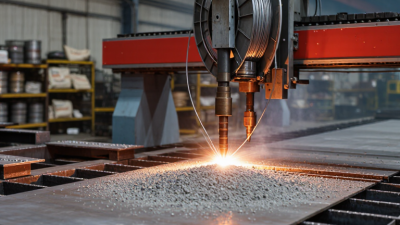
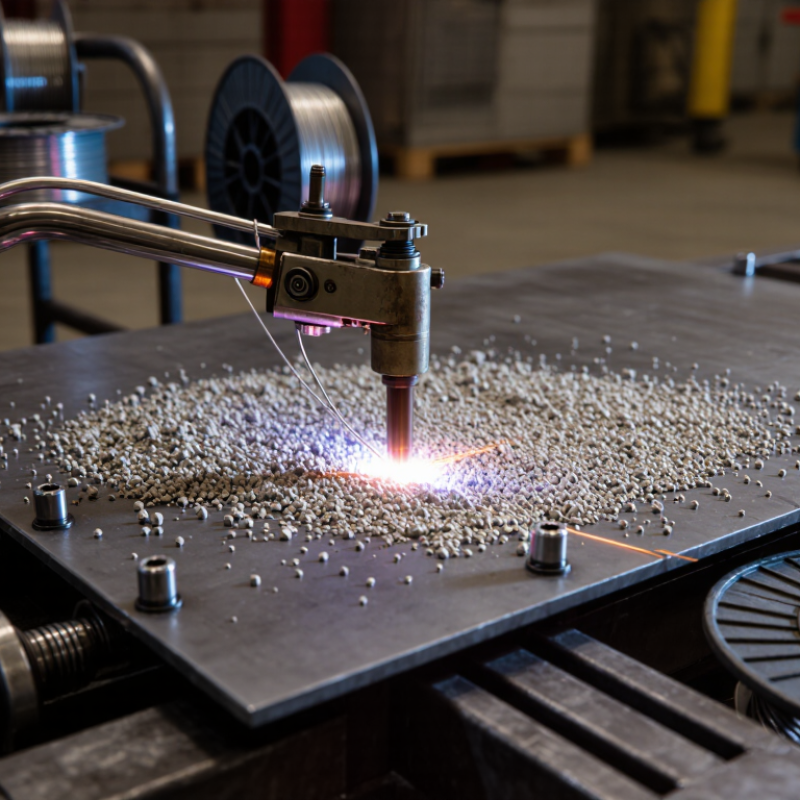
In submerged arc welding, the wire works beneath a granular flux blanket, where operators cannot watch the arc directly. A mismatch between wire chemistry, flux, base metal, or polarity can affect bead shape and mechanical properties. AWS A5.17/A5.17M and AWS A5.23/A5.23M classify carbon-steel and low-alloy-steel electrodes and fluxes, offering useful reference points for specification and purchasing. They are starting points, not substitutes for reviewing the actual procedure, service conditions, and test requirements.
These seven tips focus on decisions that can be checked: base-metal grade, required strength and toughness, wire classification, diameter, current and polarity, flux compatibility, and supplier consistency. Consider a thick plate joint running steadily on a shop floor; the best choice must suit both its specification and the production setup. A bright, even bead can still conceal a poor match. I have seen selection discussions lean too heavily on deposition rate, while overlooking impact-test needs or the joint’s real fit-up. That is easy to miss. The right Submerged Arc Welding Wire is the one that meets documented requirements and performs consistently under the conditions your team actually uses.
7 Tips for Choosing Submerged Arc Welding Wire
Understanding the Role of Submerged Arc Welding Wire
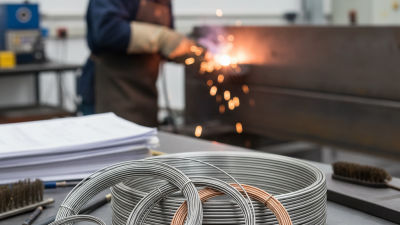
Submerged arc welding wire is more than filler metal. It contributes alloying elements to the weld and works with flux to shape the finished weld metal. The right combination can support the required strength, toughness, and bead profile. The wrong one may produce a neat-looking bead with unsuitable properties. Check the base metal, joint design, and service conditions before choosing wire.
TWI’s technical guidance notes that submerged arc welding deposition rates can reach about 45 kg per hour, depending on process settings and equipment. That is a possible upper range, not a guaranteed production rate. Tip: Match the wire classification to the required weld-metal properties, then confirm compatibility with the flux. Check current, polarity, and wire diameter against the welding procedure.
Review the wire’s material certificate and keep the consumable clean and dry. Moisture, rust, or oily residue can undermine reliable welding. One detail is easy to miss: a wire that performs well on a thick plate may not suit a thin joint or a different position. Trial welds and inspection provide useful evidence, but they do not replace procedure qualification.
| Tip | Selection Factor | What to Check | Practical Guidance | Why It Matters |
|---|---|---|---|---|
| 1 | Base-metal compatibility | Base-metal grade, thickness, joint design, and applicable welding procedure requirements. | Choose a wire-and-flux combination qualified for the material and service conditions. Confirm the combination against the applicable procedure and classification requirements. | The wire contributes weld-metal chemistry and mechanical properties; an unsuitable match can compromise strength, toughness, or crack resistance. |
| 2 | Wire-and-flux classification | The complete submerged arc welding consumable classification, not the wire designation alone. | Check the classification and test conditions for the wire/flux combination. Follow the applicable AWS specification or other governing standard. | In submerged arc welding, flux affects weld-metal chemistry and properties, so classification results apply to the specified combination and test conditions. |
| 3 | Strength and toughness | Required tensile strength, impact toughness, and any minimum service temperature. | Select a qualified combination that meets the design requirements without choosing higher strength than necessary. Verify impact-test temperature and procedure qualification where required. | Matching the required properties helps avoid under-strength weld metal and can reduce unnecessary hardness or cracking concerns associated with overmatching. |
| 4 | Wire diameter and deposition rate | Joint thickness, weld position, machine capacity, and the approved current and voltage range for the selected wire size. | Use the consumable supplier’s technical data and qualified procedure to set wire diameter and parameters. Larger wires can support higher deposition rates when equipment and joint access allow. | Wire size influences achievable current, penetration, deposition, and process stability; it should suit both the joint and the welding system. |
| 5 | Current type and polarity | Whether the procedure specifies AC or DC, and the required electrode polarity. | Follow the qualified procedure. DC electrode positive (DCEP) is commonly used for deeper penetration, while DC electrode negative (DCEN) can increase deposition rate in suitable setups; AC may help reduce magnetic arc blow. | Polarity and current type affect penetration, deposition behavior, and arc characteristics. Results also depend on wire, flux, and operating parameters. |
| 6 | Surface condition and cleanliness | Rust, oil, paint, moisture, scale, and other contaminants on the wire, flux, and joint surfaces. | Keep wire clean and dry, prepare joint surfaces as specified, and handle flux according to its product data and applicable procedure. | Contamination or moisture can contribute to porosity, hydrogen-related cracking, inconsistent feeding, and unstable weld quality. |
| 7 | Handling, feeding, and production needs | Spool or coil compatibility, wire-feed system, weld length, automation setup, and required inspection level. | Confirm that the wire package fits the feeder and that the wire feeds smoothly. Review traceability, storage instructions, and documentation before production. | Consistent feeding and proper storage support repeatable welding, reduce downtime, and help maintain consumable traceability and quality control. |