- HOME
- ABOUT US
- PRODUCTS
- TECHNOLOGY R&D
- PROJECTS
- NEWS
- Blog
- CONTACT US
inquiry
Leave Your Message
China has become a major production base for Structural Metal Beams used in warehouses, bridges, factories, and commercial buildings. Its manufacturers offer carbon steel, galvanized steel, and customized beam sections for different engineering requirements. However, “top” should describe proven performance, not marketing language.
This guide examines manufacturers through practical purchasing criteria. These include steel grades, dimensional accuracy, welding quality, surface treatment, production capacity, and delivery reliability. Experienced suppliers can provide mill certificates, inspection reports, welding procedures, and traceable batch numbers. Such documents help engineers compare products with project specifications and applicable standards. Sample checks also matter. A beam may look sound while hiding uneven coating or poor edge finishing.
Details reveal more than polished websites.
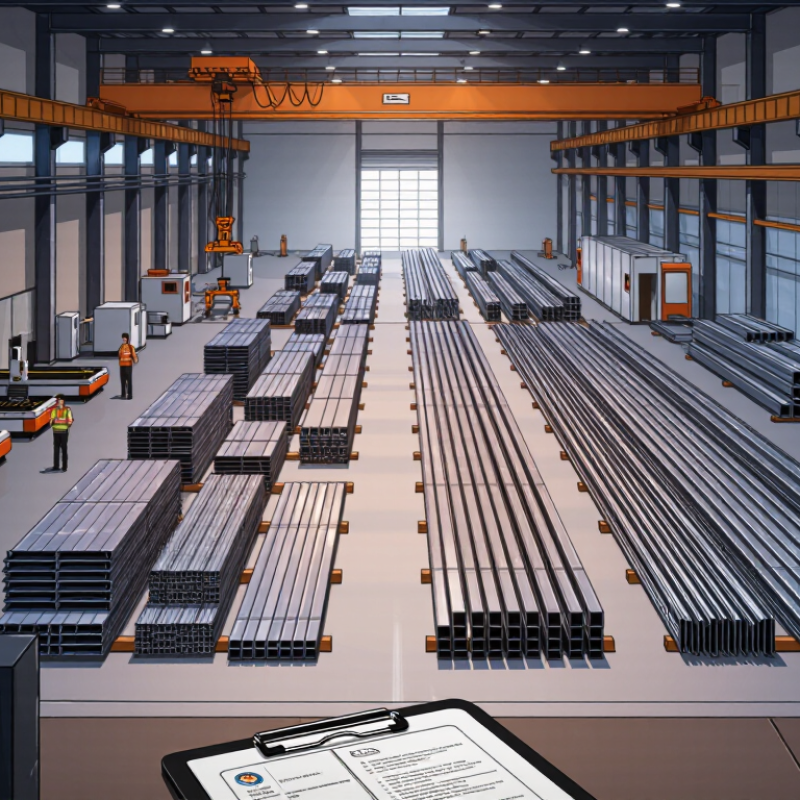
A reliable factory should explain its rolling or fabrication process clearly. Visitors may see overhead cranes, calibrated cutting equipment, shot-blasting lines, and covered storage areas. These details influence consistency, especially for large orders. Buyers should also confirm tolerances, load requirements, connection methods, and corrosion exposure before signing contracts. Factory audits, independent inspections, and third-party testing can reduce uncertainty. Yet no supplier is perfect. Delays, communication gaps, and occasional rework still deserve honest discussion.
The following overview presents leading Chinese Structural Metal Beams manufacturers based on technical capability, quality control, customization, export experience, and customer service. It does not treat company size as the only measure of reliability. Real project records, responsive engineering support, and transparent documentation often matter more. Careful comparison remains essential, because the lowest quotation may create higher installation or maintenance costs later.
China Top Structural Metal Beams Manufacturers
China’s structural beam industry rests on an enormous steelmaking base. The World Steel Association reported 1,005.1 million tonnes of crude steel production in China during 2024. This represented more than half of global output, although national production declined slightly from 2023. Such scale supports broad capacity for H-beams, I-beams, channels, and fabricated sections.
For buyers, volume is only the starting point. Reliable manufacturers should provide mill test certificates, heat numbers, dimensional records, and weldability data. Check yield strength, tensile strength, impact performance, and section tolerances against the required standard. Production experience also matters. A supplier producing bridge sections may not suit a warehouse project. Site conditions, corrosion exposure, lifting limits, and connection design can change the correct beam choice. A large national output does not guarantee consistent quality from every facility. That assumption needs challenging.
Tips: Request recent inspection records, not only catalog specifications. Confirm whether testing is performed internally or by an independent laboratory. Compare actual delivery performance, packing quality, and traceability. World Steel Association statistics describe national capacity, but they do not replace factory audits. I would also inspect surface straightness and flange alignment before shipment. Small deviations become expensive during erection. Some projects still over-specify steel, increasing cost and embodied carbon without improving safety. A qualified structural engineer should review the final selection.
| Data Category | Metric or Reference | Value | Unit | Applicable Standard / Basis | Industry Relevance |
|---|---|---|---|---|---|
| China Crude Steel Industry Overview | |||||
| Annual crude steel production | 2020 output | 1,065.7 | Mt | World Steel Association annual production statistics | Provides the upstream steel-production base for rolled sections, H-beams, I-beams, columns and fabricated structural members. |
| 2021 output | 1,035.2 | Mt | |||
| 2022 output | 1,018.0 | Mt | |||
| 2023 output | 1,019.1 | Mt | |||
| 2024 output | 1,005.1 | Mt | |||
| 2024 year-on-year change | Change from 2023 to 2024 | −1.4 | % | Calculated from reported annual crude steel output | Indicates a modest contraction in upstream crude steel volume before downstream processing into structural sections. |
| Five-year change | 2020–2024 output change | −5.7 | % | Calculated from 2020 and 2024 production figures | Highlights the relatively stable but slightly lower production level compared with the 2020 peak in this period. |
| Structural Beam Material Grades Commonly Used in China | |||||
| Q235B structural steel | Minimum yield strength for nominal thickness ≤16 mm | 235 | MPa | GB/T 700 | General-purpose structural steel for building frames, platforms, supports and non-critical fabricated members. |
| Q355B structural steel | Minimum yield strength for nominal thickness ≤16 mm | 355 | MPa | GB/T 1591 | Widely specified for load-bearing beams, columns, industrial structures and heavy fabrication. |
| Q390B structural steel | Minimum yield strength for nominal thickness ≤16 mm | 390 | MPa | GB/T 1591 | Higher-strength option for structural members requiring increased capacity or reduced member weight. |
| Q420B structural steel | Minimum yield strength for nominal thickness ≤16 mm | 420 | MPa | GB/T 1591 | Used where higher strength is required in bridges, industrial facilities and large-span structures. |
| Q460C structural steel | Minimum yield strength for nominal thickness ≤16 mm | 460 | MPa | GB/T 1591 | High-strength structural grade for demanding load-bearing applications and weight-sensitive designs. |
| Representative Hot-Rolled Beam Section References | |||||
| H 200 × 200 × 8 × 12 | Overall depth × flange width × web thickness × flange thickness | ≈49.9 | kg/m | GB/T 11263; nominal section reference | Compact H-section suitable for moderate building columns, frames and equipment supports. |
| H 300 × 300 × 10 × 15 | Overall depth × flange width × web thickness × flange thickness | ≈94.0 | kg/m | GB/T 11263; nominal section reference | Medium-to-heavy H-section for building frames, columns and industrial structures. |
| H 400 × 200 × 8 × 13 | Overall depth × flange width × web thickness × flange thickness | ≈66.0 | kg/m | GB/T 11263; nominal section reference | Deep, relatively narrow section suited to beams where bending depth is prioritized. |
| H 500 × 200 × 10 × 16 | Overall depth × flange width × web thickness × flange thickness | ≈87.0 | kg/m | GB/T 11263; nominal section reference | Heavy beam configuration for long spans, transfer structures and high-load industrial applications. |
| Hot-rolled I-section | Product standard for hot-rolled I-beams | I-section | — | GB/T 706 | Commonly used for beams, crane girders, platforms, supports and general structural steelwork. |
| Hot-rolled H-section | Product standard for hot-rolled H-sections | H-section | — | GB/T 11263 | Offers efficient two-axis behavior and is frequently selected for columns, frames and heavy beams. |
| Notes: Crude steel figures are reported in million tonnes (Mt) and refer to China’s annual crude steel production. Yield-strength values are minimum nominal values for sections with thickness up to 16 mm; permitted values vary with thickness and steel grade. Section masses are representative nominal values and may vary slightly because of corner radii, rolling tolerances and exact product specifications. Standards referenced: GB/T 700, GB/T 1591, GB/T 706 and GB/T 11263. | |||||