inquiry
Leave Your Message

Top China Steel Structure Building Manufacturers?

Choosing among the top China steel structure building manufacturers requires more than comparing factory prices. Steel Structure Buildings must perform reliably in wind, rain, snow, seismic zones, and daily industrial use. A polished website is not enough.

This guide introduces practical criteria for evaluating Chinese manufacturers. It considers engineering experience, production capacity, material traceability, welding quality, corrosion protection, and project communication. Factory visits, inspection records, and completed project evidence can reveal more than marketing language. Look for manufacturers that provide clear structural drawings, steel grades, connection details, coating specifications, and installation guidance. Reliable suppliers should also explain how they manage design changes, packaging, shipping, and on-site assembly.

Details matter.

A strong manufacturer may show automated cutting lines, covered welding bays, calibrated testing equipment, and organized steel storage. These signs do not guarantee perfection, but they support professional judgment. Customer references and independently verifiable project information add further confidence. International standards may guide production, yet local building codes and site conditions still require careful review by qualified professionals.

The ranking of “top” manufacturers is never completely objective. A supplier successful in warehouse projects may not suit a high-rise workshop or a remote agricultural facility. Some companies communicate quickly but provide limited technical depth. Others offer excellent engineering but slower commercial responses. This guide recognizes those imperfections instead of hiding them. Its purpose is to help buyers compare capabilities, ask sharper questions, and select a manufacturer that matches the project’s risks, budget, schedule, and long-term performance expectations.
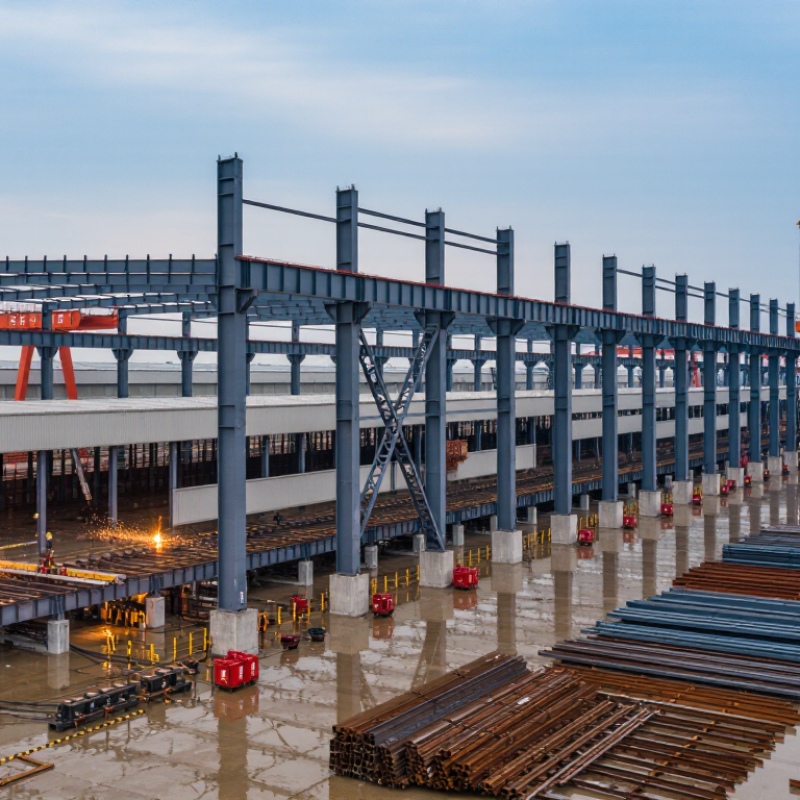
Top China Steel Structure Building Manufacturers?

What Defines a Top China Steel Structure Building Manufacturer?

A top China steel structure building manufacturer is defined by controlled performance, not factory size or polished brochures. According to the World Steel Association’s World Steel in Figures 2024, China produced about 1,019 million tonnes of crude steel in 2023. That scale creates opportunity, but it does not guarantee reliable building quality.

Look for traceable steel certificates, documented welding procedures, and independent inspection records. Experienced manufacturers should explain steel grades, connection design, fire protection, and corrosion treatment in practical language. Their engineers should use BIM or detailed shop drawings before cutting begins. Fabrication tolerances must follow the project standard, such as GB, EN, or ASTM requirements. Small errors matter. A misaligned base plate can delay an entire installation crew.

Delivery control also separates capable suppliers from weak ones. Ask for production schedules, packing lists, moisture protection, and site-erection guidance. The International Energy Agency reports that steelmaking produces roughly 7% to 9% of global energy-related carbon emissions, so material efficiency deserves attention. A responsible manufacturer reduces unnecessary steel through structural optimization and records recyclable materials.

No factory is flawless. That is worth admitting. The better question is how quickly it detects and corrects mistakes. Factory audits, sample weld testing, dimensional checks, and clear after-sales communication provide stronger evidence than claims alone. Experience becomes credible when it appears in inspection files, completed structures, and measurable delivery performance.
Key Criteria for Evaluating Chinese Steel Structure Manufacturers

Top China Steel Structure Building Manufacturers?

Selecting a leading Chinese steel structure manufacturer requires evidence, not a polished ranking. The World Steel Association’s World Steel in Figures 2024 reports China produced 1,019.1 million tonnes of crude steel in 2023. This scale suggests strong material availability, but it does not prove fabrication quality. Ask for project records matching your building type, span, loading, and local codes. Factory experience matters.

A reliable evaluation should examine traceability from mill certificate to installed member. Check welding procedures under ISO 3834, fabrication controls aligned with EN 1090, and documented non-destructive testing. Request coating thickness records, dimensional inspection sheets, and photographs of trial assembly. The International Organization for Standardization emphasizes process control, yet certificates alone cannot replace site evidence. I have seen impressive documentation hide weak communication between engineering and production. That risk deserves attention. Do not confuse scale with control.

Tips: Compare at least three recent projects with similar complexity. Verify whether an independent inspector can visit the factory. Request a sample inspection plan before signing. Review delivery data, not only promised dates. A low quotation can still become expensive when drawings change, tolerances fail, or packaging causes corrosion. Leave room for doubt. A careful buyer should test assumptions, especially when technical terms appear translated or incomplete.

Top China Steel Structure Building Manufacturers? - Key Criteria for Evaluating Chinese Steel Structure Manufacturers
Evaluation Dimension Key Criterion What to Verify Reliable Evidence or Benchmark Suggested Weight Score
Technical Capability Structural design competence Ability to prepare structural calculations, connection details, shop drawings, and project-specific designs. Signed design documents, engineering team qualifications, design software workflow, and examples of comparable completed projects. 15% /5
Product Quality Steel grades and material traceability Whether the manufacturer controls steel grade selection, heat numbers, mill certificates, and incoming material inspection. Material test certificates, traceability records, inspection procedures, and compliance with the project specification. 12% /5
Welding Control Welding procedure qualification Control of welding processes, welder qualifications, preheating, inspection, and repair procedures. Qualified welding procedures, welder certificates, welding inspection records, and non-destructive testing reports. 12% /5
Fabrication Capacity Production resources and capacity Availability of cutting, drilling, forming, blasting, painting, assembly, and loading facilities suitable for the project scale. Factory audit, equipment list, production schedule, capacity statement, and evidence of subcontractor controls. 10% /5
Quality Management Inspection and quality assurance system Whether quality responsibilities, inspection points, nonconformance handling, and final release procedures are clearly defined. Quality manual, inspection and test plan, internal audit records, corrective-action reports, and applicable management-system certificates. 12% /5
Standards Compliance International code familiarity Experience applying the structural, welding, coating, fire, seismic, and loading standards required in the destination market. Code compliance matrix, project references using the required standards, and review by qualified engineers. 10% /5
Surface Protection Corrosion protection and coating control Control of surface preparation, coating systems, dry-film thickness, environmental conditions, and touch-up work. Approved coating specification, surface preparation records, coating inspection reports, and paint manufacturer technical documentation. 8% /5
Project Delivery Schedule and logistics management Ability to coordinate engineering approval, procurement, fabrication, packing, shipping, customs documents, and site delivery. Detailed manufacturing schedule, logistics plan, packing method, delivery milestones, and documented on-time delivery performance. 10% /5
Commercial Reliability Quotation transparency and contract control Clarity of inclusions, exclusions, material specifications, tolerances, payment terms, warranty conditions, and change-order procedures. Itemized quotation, technical offer, commercial terms, warranty statement, and clearly defined responsibilities matrix. 6% /5
Communication Technical and project communication Responsiveness, document control, English-language capability, issue tracking, and coordination with consultants or contractors. Sample submittal process, communication workflow, document register, response-time records, and designated project contacts. 5% /5
After-Sales Support Installation and warranty support Availability of erection guidance, technical clarification, replacement-part support, defect response, and warranty administration. Installation manuals, method statements, service procedures, warranty terms, and references for post-delivery support. 5% /5
Responsible Sourcing Environmental and labor practices Management of energy use, waste, worker safety, legal employment, and responsible supply-chain practices. Environmental and safety records, worker training documentation, waste-handling procedures, and relevant third-party assessments. 5% /5
Weighted evaluation result 100% /5
Recommended scoring method: assign each criterion a score from 1 to 5, multiply the score by the suggested weight, and compare the weighted results. A document review, factory audit, sample inspection, and reference verification should be completed before selecting a manufacturer.

Major Types of Steel Structure Buildings Produced in China

China’s steel structure building sector produces a wide range of practical systems. Industrial warehouses remain common, with clear spans, overhead crane supports, and insulated sandwich panels. These buildings suit factories, logistics centers, and workshops where open floor space matters.

Commercial steel buildings include shopping halls, offices, sports centers, and exhibition venues. Their frames can support large glass façades and flexible interior layouts. Multi-story steel buildings also use composite floors, fire-resistant coatings, and carefully designed stair cores. Agricultural buildings are simpler, yet they still need reliable ventilation, drainage, and corrosion protection. Cold storage facilities require tighter joints and thicker insulation around doors and wall panels.

Modular steel buildings are increasingly used for temporary offices, worker accommodation, and classrooms. They are fast to assemble, but transport limits can affect room sizes and connection details. From practical project reviews, the cheapest frame is rarely the best choice. Wind loads, seismic conditions, soil reports, and local fire codes must guide the design. Small errors in anchor bolt positions can delay installation. They happen.

Manufacturers in China commonly provide design coordination, fabrication, surface treatment, and site guidance. Quality depends on weld inspection, steel traceability, dimensional checks, and accurate packing lists. Buyers should review drawings carefully before production begins. A minor change after fabrication may create unnecessary waste, especially for customized roofs or crane systems.

Manufacturing Capabilities, Certifications, and Quality Control

Top China steel structure building manufacturers are usually separated by practical capability, not polished brochures. A reliable factory should show its production lines, inspection records, and completed project evidence. Look for CNC cutting, robotic or qualified manual welding, shot blasting, and controlled coating rooms. These details affect fit-up, corrosion resistance, and installation speed.

Certifications matter, but they need careful verification. ISO 9001 can support a documented quality system, while welding qualifications and EN 1090 compliance may demonstrate stronger production control. Certificates should match the factory’s legal entity, current scope, and actual processes. Independent audits can confirm this. Ask how each beam is traced from incoming steel to final dispatch. Good manufacturers record mill certificates, weld inspections, bolt tests, coating thickness, and dimensional measurements. Photos alone are weak evidence.

Quality control should continue beyond the factory gate. Experienced teams review shop drawings, connection details, loading assumptions, and packing methods before production. They also provide inspection and test plans with clear acceptance points. A rushed revision can still create a costly site problem. No factory is flawless. The better ones admit risks, document corrections, and invite technical review. That practical honesty often matters more than a long certification list. Before choosing a supplier, compare sample reports, audit access, engineer credentials, and the company’s response to difficult questions.

How to Select the Right China Steel Structure Building Manufacturer

How to Select the Right China Steel Structure Building Manufacturer

Selecting a China steel structure building manufacturer requires more than comparing quotations. World Steel Association’s World Steel in Figures 2024 reports that China produced about 1.02 billion tonnes of crude steel in 2023. This scale offers strong sourcing capacity, but capacity does not guarantee project quality. Ask for recent factory records, production photos, and similar building references. Check whether the proposed steel grade matches your structural calculations.

A reliable evaluation should follow the steel from mill certificate to installation. Request heat-number traceability, welding procedure qualifications, and independent inspection reports. ISO 3834 provides a recognized framework for welding quality management. Confirm that the manufacturer controls dimensional tolerances, coating thickness, bolt testing, and packing moisture. Small gaps matter. A missing inspection record can become an expensive site delay.

Delivery capability also deserves evidence. The World Bank’s Logistics Performance Index 2023 placed China 19th globally, with a score of 3.7. That supports efficient export logistics, yet port performance cannot replace project planning. Review container loading drawings, customs documents, and the responsibility for damaged materials. I have seen buyers focus too heavily on the lowest price. That is understandable, but incomplete. Compare steel weight, connection details, engineering support, warranty wording, and response times. A video tour helps, though it is not a full audit. An independent pre-shipment inspection remains wise.

How to Select the Right China Steel Structure Building Manufacturer

A reliable manufacturer should be able to design and fabricate structures that meet the specified steel grade and strength requirements. This chart shows the minimum yield strength of common Chinese structural steel grades under GB/T 1591 for thicknesses up to 16 mm. Buyers should also verify design capability, welding quality, dimensional control, coating systems, production capacity, and project documentation before making a final selection.