- HOME
- ABOUT US
- PRODUCTS
- TECHNOLOGY R&D
- PROJECTS
- NEWS
- Blog
- CONTACT US
inquiry
Leave Your Message
Choosing the best Arc Welding Robot for industrial production is not a brand-name contest. The right system must fit the part, weld process, and daily workload. A compact cell for repeatable steel brackets may need different reach and tooling from a line handling long frames. Small details matter: torch access, cable routing, fixture clearance, and how quickly operators can change a job.
Start with the weld itself. Consider material, joint type, required accuracy, and production volume. Then compare robot reach and payload with the torch, cables, and any mounted sensors. Check whether the controller supports the welding power source and the programming methods your team can maintain. Seam tracking can help with part variation, but it cannot fix poor fixturing. A useful reminder.
Buyers should also review duty cycle, consumables, maintenance access, spare-part availability, and local service support. Ask suppliers to demonstrate a representative part, not just a clean showroom sample. Inspect the finished weld, changeover time, and recovery process after a fault. Confirm that guarding, fume extraction, and safety controls suit the proposed cell and site conditions. These checks make comparisons more reliable.
There is no universal winner. A lower purchase price may bring higher integration or downtime costs; a premium feature may sit unused. This guide compares practical selection criteria for 2026 and explains what to verify before requesting a quote. Treat every specification as a starting point. Your own parts and production data should decide.
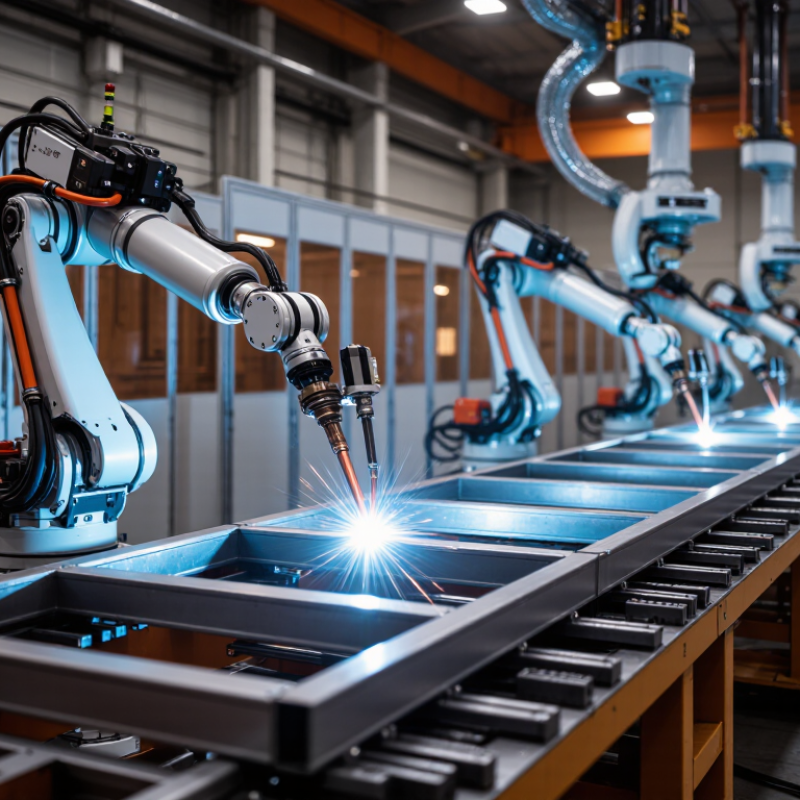
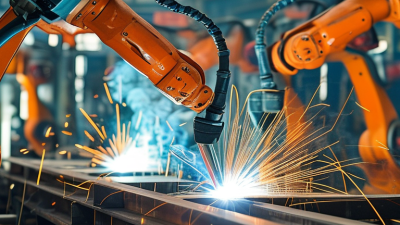
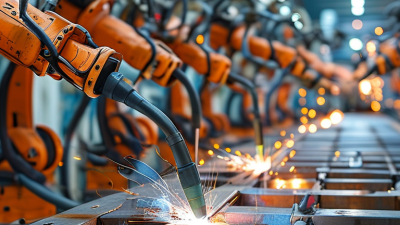
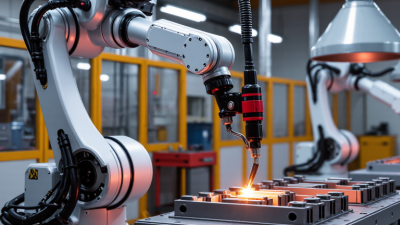
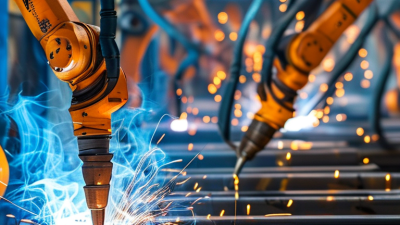
In modern production, an arc welding robot guides a welding torch along programmed joints, joining components at a controlled speed and angle. Its controller coordinates torch movement with the welding power source, helping maintain consistent travel speed, wire feed, and arc settings. On a fabrication line, that can mean repeating the same bead across dozens of steel brackets per shift. Consistency matters.
The wider adoption of automation provides useful context, though it is not welding-specific. The International Federation of Robotics reported 4.28 million industrial robots operating worldwide at the end of 2023, a 10% increase from 2022. Its World Robotics 2024 report also recorded 541,302 new industrial robot installations in 2023. These figures indicate expanding industrial use, not a guarantee that every welding task suits automation.
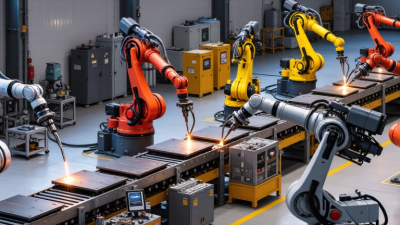
Arc welding robots are most useful for repeatable work with stable parts, fixtures, and access to the seam. Sensors can help locate joints when components shift, while technicians monitor weld quality and adjust programs when materials or fit-up change. A robot can repeat a poor setup perfectly. That is the catch. Even a small gap or misplaced clamp may cause defects, so production teams still need sound process planning, inspection, and skilled oversight.
| Dimension | Typical industrial range or capability | What the robot does in production | Buyer consideration |
|---|---|---|---|
| Robot configuration | Six-axis articulated arms are common for arc-welding cells. | Positions the torch along joints with control of torch angle and approach. | Check access to all welds, fixture clearance, and whether a positioner or track is needed. |
| Working reach | Many medium-sized welding arms offer roughly 1.4–2.0 m of reach; longer-reach models are available. | Covers workpieces and weld seams within the robot’s reachable workspace. | Evaluate the full work envelope, not just the maximum reach figure; fixtures and torch orientation reduce usable access. |
| Rated payload | Welding-arm payload ratings commonly fall in the single-digit to low-tens-of-kilograms range, depending on model. | Carries the welding torch and associated equipment while following programmed paths. | Include the torch, mounting hardware, cables, and any added sensors when checking wrist load and inertia limits. |
| Repeatability | Industrial robot specifications often state repeatability in the hundredths-of-a-millimetre range; the exact figure is model-specific. | Returns the torch to taught positions consistently under comparable operating conditions. | Repeatability is not the same as absolute accuracy; part variation may require fixtures, sensing, or touch-up. |
| Welding processes | Common automated arc processes include GMAW (MIG/MAG) and, in suitable applications, GTAW (TIG). | Coordinates torch motion with the welding power source and process settings. | Match the process, wire or filler, material, joint design, and required weld quality to the application. |
| Seam tracking and sensing | Options include touch sensing, through-arc sensing, and laser-based seam tracking; availability depends on the cell setup. | Detects joint position or seam deviation and helps adjust the programmed path. | Choose sensing based on joint type, part tolerances, surface condition, and the amount of variation in incoming parts. |
| Workpiece positioning | Fixed fixtures, single-axis positioners, and multi-axis positioners are used according to part size and weld access needs. | Presents joints in more suitable orientations and can support continuous or indexed production. | Confirm payload, rotation range, load balance, cycle sequence, and safe coordination with the robot. |
| Production role | Suitable for repeatable, programmed weld sequences and recurring part families. | Performs torch movements while operators load parts, supervise the cell, and manage quality checks. | Assess changeover time, batch size, programming needs, operator training, and maintenance support. |
| Safety and integration | A production cell typically requires a risk assessment and appropriate safeguarding, such as interlocked guarding or validated safety equipment. | Operates as part of an integrated cell with the power source, fixtures, extraction, controls, and safety system. | Plan for fume extraction, welding screens, access control, emergency stops, and applicable local safety requirements. |
Note: Ranges and capabilities are general industry guidance, not specifications for a particular robot. Verify exact performance, payload, reach, process compatibility, and safety requirements against the selected system’s documentation and the intended application.