Choosing an Arc Welding Robot is rarely as simple as comparing speed, payload, and advertised price. Manufacturers and suppliers often present impressive cycle times, polished videos, and broad application lists. Yet a robot that performs well on a showroom bracket may struggle with your actual joint design, material variation, or workshop layout.
This guide examines leading Arc Welding Robot manufacturers and suppliers through practical selection criteria. These include torch accessibility, positional accuracy, controller usability, welding power-source compatibility, programming support, safety integration, and after-sales service. We also consider the experience behind the sale. A capable supplier should explain fixture design, cable management, fume control, operator training, and maintenance requirements in clear terms. Those details affect production every day.
Real-world reliability matters more than attractive specifications. Ask whether the supplier can provide application testing, documented performance data, spare-parts access, and references from comparable factories. Regional support can also reduce downtime when calibration or troubleshooting becomes necessary. However, no ranking can identify one universal winner. Production volume, weld geometry, labor skills, and budget change the answer.
Some information remains difficult to verify.
Marketing language may hide limitations. Independent testing is not always available, and supplier references may represent unusually successful installations. Therefore, this overview balances technical evidence with practical judgment, while recognizing its limits. Readers should validate shortlisted systems with sample welds, realistic fixtures, and total ownership-cost calculations before making a final decision.
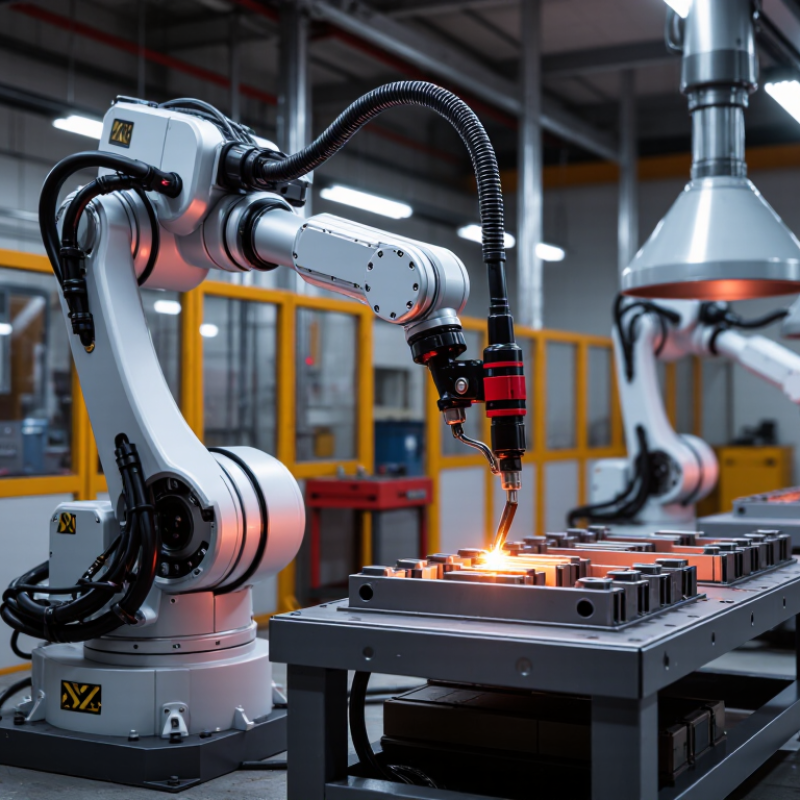
An arc welding robot is an automated system that joins metal parts through an electric arc. It combines a robotic arm, welding torch, power source, wire feeder, controller, and safety enclosure. The robot moves the torch along a programmed path while maintaining a controlled distance from the workpiece. Heat melts the wire and base metal, creating a strong joint as the molten pool cools. A positioner may rotate the component for better access and steadier weld quality.
Before production, a technician defines the joint path, travel speed, torch angle, voltage, and wire-feed rate. The controller then sends coordinated commands to the arm and welding equipment. A wire feeder supplies filler metal continuously. As the torch travels, shielding gas protects the arc from surrounding air. Sensors can detect seam location, arc length, or changes in joint shape. This feedback helps correct small variations, although it cannot solve every setup problem. The result depends heavily on accurate fixtures and clean material.
In practical use, reliable automation begins with a clear process study. A capable supplier should provide cell design, programming, operator training, maintenance guidance, and spare-part support. Operators still inspect weld appearance, penetration, and dimensional accuracy. Shop-floor experience shows that rusty steel, poor fit-up, and changing joint gaps can reduce performance. Small errors matter. A robot can repeat a process precisely, but it cannot improve an unstable process by itself. Cycle-time claims also need careful testing under real production conditions.
Modern arc welding robots combine precise motion, controlled heat, and continuous sensing. The International Federation of Robotics reported 541,302 industrial robots were installed worldwide in 2023. Its World Robotics 2024 report also recorded more than 4.28 million robots operating globally. These figures show why welding cells now depend on reliable software, not only strong mechanical arms.
Arc welding systems increasingly use vision sensors and laser seam tracking. Cameras locate joints, while laser sensors measure gaps and torch alignment during movement. Adaptive control can adjust welding current, voltage, and travel speed when material conditions change. Digital twins help engineers test reachability, collision risks, and cycle times before production begins. Data logging also records arc stability, wire consumption, and temperature changes. Useful evidence.
Modern controllers connect robots with power sources through industrial networks. This enables synchronized starts, automatic parameter changes, and faster fault diagnosis. Collaborative safety functions can reduce speed near workers, but risk assessment remains essential. ISO 10218 requirements and local safety rules still guide cell design. Supplier evaluations should examine sensor accuracy, service response, integration experience, and training quality. A low purchase price can hide expensive programming delays.
The technology is impressive. It is not flawless. Reflective surfaces, poor fit-up, smoke, and spatter can confuse sensors. Skilled technicians still correct unusual welds and maintain calibration. Industry forecasts often emphasize automation growth, yet factory results depend on preparation, fixture quality, and disciplined data collection. A practical trial weld may reveal more than a polished demonstration.
Top Arc Welding Robot Manufacturers and Suppliers
Top arc welding robot manufacturers and suppliers should offer more than a robotic arm. They need proven welding cells, stable software, and responsive technical support. In practical factory evaluations, I check torch positioning, wire feeding, seam tracking, and cycle consistency. A reliable supplier can demonstrate test welds on similar steel thicknesses. Ask for samples showing clean beads, limited spatter, and repeatable penetration. Documentation matters too, especially maintenance schedules, safety procedures, and operator training.
Tips: Request a complete process trial before signing. Measure arc time, changeover speed, and reject rates. Inspect the controller interface yourself. It should feel clear under production pressure. Confirm spare-part availability and local service coverage. A low purchase price can become expensive when one sensor stops production. The cheapest quote is not always the practical choice.
The strongest suppliers also study your workspace instead of selling identical packages. They should review fixture access, floor space, ventilation, and expected production volume. Integration with positioners, clamps, and inspection tools may determine the real return. Some proposals look impressive but ignore awkward weld angles or frequent part changes. That deserves careful questioning. A perfect shortlist is rare, and my own early evaluations have sometimes underestimated operator learning time. Leave room for adjustment. Suppliers with transparent performance data, documented testing, and realistic delivery promises are easier to trust.
When comparing arc welding robot manufacturers and suppliers, examine the complete production system, not only the robot arm. The International Federation of Robotics reported 541,302 industrial robot installations worldwide in 2023. Its 2024 report also recorded more than 4.28 million robots operating globally. This growth increases supplier choice, but specifications still need practical testing. Compare reach, payload, repeatability, torch access, controller response, and protection ratings. Ask for sample welds using your actual steel thickness, joint design, wire, and shielding gas. A smooth showroom demonstration proves little.
Service capability matters just as much. Check local technicians, spare-parts availability, training hours, software updates, and remote diagnostic procedures. Welding productivity reports often emphasize arc-on time, but cycle-time claims can hide loading, cleaning, and repositioning delays. Request a complete time study. Published market forecasts also vary considerably because they define “welding robot” differently. Treat impressive growth figures carefully. A lower purchase price may create higher costs through downtime, fixtures, or difficult programming.
Tips: Build a comparison sheet with weighted scores. Give service response time equal importance to arm speed. Measure usable arc-on time during a pilot run. Ask suppliers to explain failed welds, not only successful ones. I would not choose the highest payload automatically; oversized equipment can waste floor space and energy. Review safety compliance against applicable local requirements, then document acceptance tests before signing. Sources: International Federation of Robotics, World Robotics 2024; ISO 10218 robotics safety standards.
| Comparison Dimension | Practical Benchmark for Arc Welding | Importance | Data or Documents to Request | Questions to Ask Manufacturers or Suppliers |
|---|---|---|---|---|
| Welding Process Compatibility | Confirm support for the required process, such as GMAW/MIG, FCAW, GTAW/TIG, or tandem welding. GMAW and FCAW are commonly used for automated production welding. | High | Process list, controller compatibility chart, welding power-source interface, and sample weld procedure. | Can the system control wire feed speed, voltage, inductance, shielding gas, crater fill, burnback, and arc-start parameters? |
| Robot Payload and Wrist Capacity | The payload must cover the torch, torch mount, dress pack, collision sensor, and cable forces. A welding robot commonly requires a payload capacity in the approximate 6–20 kg range, depending on tooling. | High | Robot datasheet, wrist moment specifications, payload calculation, and tooling weight list. | Does the rated payload include the complete torch package and cable dress, or only the nominal end-effector weight? |
| Reach and Work Envelope | Typical six-axis arc-welding robots provide approximately 1.4–2.1 m of horizontal reach. The selected reach must cover all weld joints without excessive axis extension. | High | Reach diagram, CAD model, axis travel data, and a digital or physical cell layout. | Can the robot reach every weld position while maintaining suitable torch angle, work angle, and cable clearance? |
| Repeatability | Industrial arc-welding robots commonly specify a pose repeatability around ±0.02–±0.08 mm under the applicable measurement method. Repeatability alone does not guarantee weld accuracy. | High | Repeatability specification, test standard, calibration procedure, and sample accuracy results. | What is the stated repeatability standard, and how is fixture tolerance or part variation compensated? |
| Weld Tracking and Seam Finding | For variable joint position or fit-up, consider touch sensing, through-arc seam tracking, laser vision, or a combination of these methods. | High | Sensor specification, supported joint types, detection accuracy, cycle-time impact, and demonstration welds. | Which sensing method is recommended for gaps, distortion, joint offset, and inconsistent part presentation? |
| Welding Positioner and Synchronization | A coordinated positioner can improve torch access and reduce robot wrist movement. Check payload, rotation speed, allowable inertia, and synchronized motion capability. | High | Positioner load chart, inertia limits, synchronization configuration, and cycle-time simulation. | Can the robot and positioner move in coordinated axes, and is the positioner controlled from the same robot controller? |
| Controller and Welding Software | Look for offline programming, weld-data libraries, job backup, password control, error diagnostics, multi-layer programming, and production data access. | High | Software feature list, user interface demonstration, licensing terms, backup procedure, and communication protocol list. | Can operators edit weld schedules without changing robot motion programs, and can programs be backed up and restored without supplier intervention? |
| Torch, Wire Feeder, and Peripheral Integration | The package should include compatible torch geometry, wire feeder, liner, contact tips, reamer, torch cleaning, wire-cutting, and collision detection where required. | High | Peripheral bill of materials, compatibility matrix, consumable part numbers, and maintenance schedule. | Are replacement consumables locally available, and does the system automatically confirm torch cleaning and wire-cutting status? |
| Duty Cycle and Production Capacity | Evaluate actual arc-on time, not only robot travel speed. A complete cell should be assessed by weld length per hour, cycle time, changeover time, and rework rate. | High | Timed sample cycle, arc-on-time estimate, production assumptions, and acceptance-test criteria. | What output was achieved using the same material, joint design, weld length, wire size, and fixture arrangement? |
| Material and Welding Parameter Range | Confirm compatibility with the production materials, including carbon steel, stainless steel, or aluminum, as well as wire diameters, shielding gases, plate thicknesses, and joint types. | High | Qualified welding procedures, parameter windows, sample weld records, and applicable material certifications. | Can the supplier provide procedure development for the required thickness, joint preparation, filler metal, and shielding gas? |
| Safety and Compliance | The complete cell should address risk assessment, guarding, interlocked doors, emergency stops, light curtains or scanners, fume extraction, and applicable machinery and robot safety requirements, including ISO 10218 where relevant. | High | Risk assessment, safety-circuit documentation, declaration of conformity, electrical drawings, and validation records. | Who is responsible for final cell safety validation, and which safety functions are included in the quoted scope? |
| Environmental Protection | Check the robot wrist and body protection for welding spatter, dust, heat, and humidity. An IP rating such as IP65 may be specified for suitable robot components, but the exact rating varies by axis and configuration. | Medium | IP-rating certificate, operating-temperature range, permitted humidity, and protection options for torch cables. | Which components are protected against spatter, and what additional covers or dress-pack protection are required? |
| Installation and Commissioning | Compare the supplier’s scope for mechanical installation, electrical connection, robot mastering, process setup, safety validation, trial production, and operator training. | Medium | Statement of work, site requirements, installation schedule, training agenda, and acceptance-test plan. | What site utilities, floor conditions, compressed-air quality, power supply, and extraction capacity are required? |
| Service and Spare-Parts Support | Assess regional service coverage, remote diagnostics, response time, spare-parts availability, preventive maintenance, and technician training. | High | Service-level agreement, spare-parts list, support hours, escalation procedure, and maintenance training plan. | What is the expected response time for production-critical failures, and which parts should be stocked on site? |
| Training and Documentation | A complete package should include robot operation, programming, welding-process adjustment, troubleshooting, safety, maintenance, electrical drawings, manuals, and backup files. | Medium | Training hours, language options, manuals, electrical schematics, software backup, and competence checklist. | Is training included for operators, programmers, maintenance staff, and welding-process personnel? |
| Total Cost of Ownership | Compare the complete lifecycle cost, including robot cell price, tooling, positioner, welding equipment, consumables, energy, maintenance, software licenses, training, and downtime. | High | Itemized quotation, five-year operating-cost estimate, consumable forecast, warranty terms, and license schedule. | Which costs are excluded from the quotation, and what recurring fees or proprietary consumables should be expected? |
| Acceptance Testing and Warranty | Define measurable acceptance criteria for cycle time, weld quality, dimensional accuracy, safety functions, uptime, documentation, and operator training before final payment. | High | Factory acceptance test, site acceptance test, warranty certificate, defect-resolution process, and performance guarantee. | How are failed acceptance tests handled, and does the warranty cover both robot hardware and integrated welding peripherals? |

Top Arc Welding Robot Manufacturers and Suppliers?
Arc welding robots support repeatable production in automotive parts, steel frames, agricultural equipment, and heavy machinery. Their value depends on more than arm speed. Welding cells must match material thickness, joint design, production volume, and available floor space. A six-axis robot may reach difficult seams, but it still needs accurate fixtures and stable workholding. In practice, poor fixture alignment creates more defects than slow robot motion. Operators should also inspect wire feeding, torch cooling, shielding gas flow, and weld monitoring systems.
Selection should begin with the application, not the catalogue. Check the robot’s payload, working envelope, repeatability, duty cycle, and controller functions. Confirm compatibility with the welding power source, positioner, sensors, and existing production software. Service response matters too. A technically impressive system becomes expensive when spare parts or programming support arrive late. Safety design deserves close attention, including guarding, emergency stops, fume extraction, and controlled access. Local requirements may differ, so documented compliance should be verified before installation.
Tips: Test a representative joint before purchasing. Use the actual wire, material, fixture, and welding position. Measure cycle time and defect rates. Ask suppliers for training plans, maintenance schedules, and realistic service terms. Do not trust perfect demonstrations alone. Real production includes dust, vibration, changing operators, and occasional setup mistakes. A short pilot run can reveal weaknesses that polished presentations hide.